
Los Angeles, California / 500NewsWire / July 7, 2026 / Electric vehicles have already changed the way people think about getting from point A to point B. Faster charging, longer range, and lower maintenance have pulled millions of drivers away from gasoline engines. But one question still lingers in the back of almost every EV owner’s mind: how healthy is my battery really, and how long will it last?
For years, the honest answer has been “we’re not entirely sure.” Range estimates have always felt like a bit of a guessing game, shaped by weather, driving habits, and how the car happens to “feel” that day. That era of uncertainty is starting to fade, thanks to a new approach called Predictive Battery Intelligence — and it may be the most meaningful shift in EV technology since the battery itself.
From Reporting the Present to Predicting the Future
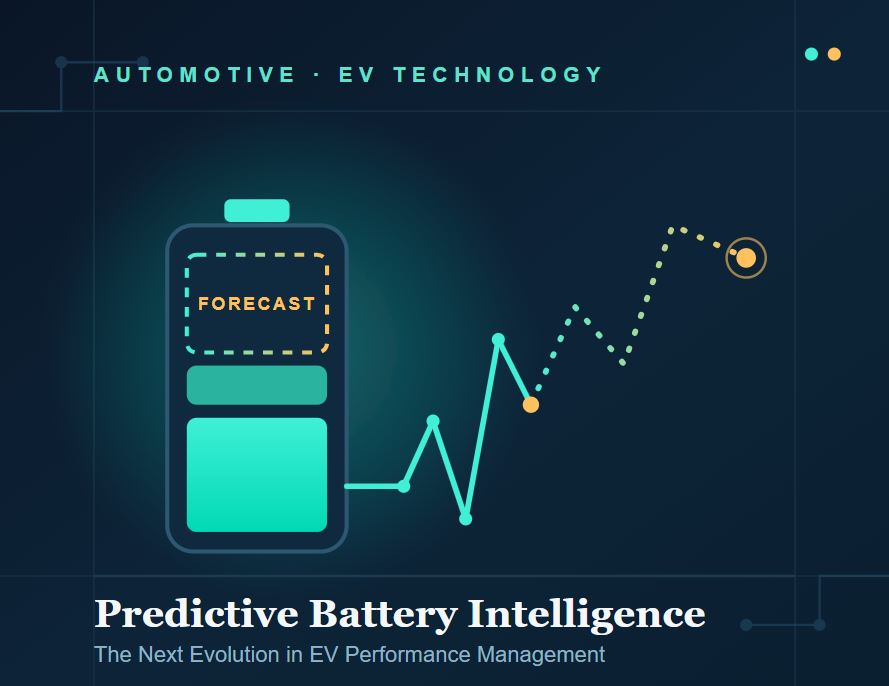
Traditional battery systems are reactive. They tell you what’s happening right now — 62 percent charge, estimated range, current temperature — and little else. Predictive battery intelligence works differently. It combines real-time sensor data, historical charging patterns, and machine learning to forecast how the battery will behave tomorrow, next month, or three years from now.
Every battery ages differently. Two identical vehicles can show very different battery health after a few years, simply because one owner fast-charges daily in summer heat while the other charges slowly overnight. Predictive systems study these patterns continuously, comparing millions of data points across charging cycles and driving conditions to catch early warning signs — a slightly irregular charging curve, a subtle temperature imbalance between cells — long before they turn into an expensive repair or a car stranded on the roadside.
Why It Matters to Almost Everyone in the EV Ecosystem
Battery anxiety touches nearly every part of the industry. Buyers worry about degradation. Fleet managers worry about downtime. Manufacturers worry about warranty claims. Predictive battery intelligence quietly addresses all three at once.
For everyday drivers, it means smarter planning. Picture preparing for a long road trip: instead of just showing remaining range, the vehicle could factor in weather, elevation, driving style, and battery temperature to suggest the most efficient charging stops along the way.
For fleet operators — delivery companies, ride-share networks, transit authorities — the payoff is even bigger. Monitoring battery health across hundreds of vehicles allows maintenance to be scheduled before a failure happens rather than after, protecting both budgets and schedules. And if one battery module starts behaving differently from the rest, technicians can replace just that component instead of the entire pack, which meaningfully cuts down one of EV ownership’s biggest expenses.
Smarter Charging, Longer Life
Many drivers wonder if fast charging quietly damages their battery. The truth is nuanced — convenient, yes, but repeated rapid charging under certain conditions can add extra stress. Predictive systems can offer personalized guidance: slowing down after several consecutive fast charges, or suggesting an 80 percent charge instead of a full one when it isn’t needed. Drivers don’t need to become battery scientists; the car simply handles the thinking for them.
A Quieter Benefit: Sustainability
Batteries that last longer also mean fewer replacements, which reduces demand for raw materials like lithium, nickel, and cobalt. Predictive intelligence can even help identify batteries that, while no longer ideal for driving, still have years of useful life left for second-life uses such as renewable energy storage — extending value instead of sending a battery straight to recycling.
What’s Coming Next
As the underlying AI matures, expect predictive systems to do even more: scheduling their own service appointments, optimizing charging around electricity prices, or communicating with charging stations before a car even arrives. Manufacturers are investing heavily here because they understand something simple — battery reliability shapes customer trust more than almost anything else.
Final Thoughts
Electric vehicles are no longer defined only by range or charging speed. The next real breakthrough is understanding a battery’s future before problems arrive. Predictive Battery Intelligence turns battery care from a reactive chore into a proactive, almost invisible partnership between car and driver — and as it keeps improving, it’s quickly becoming one of the most valuable innovations in modern transportation.