
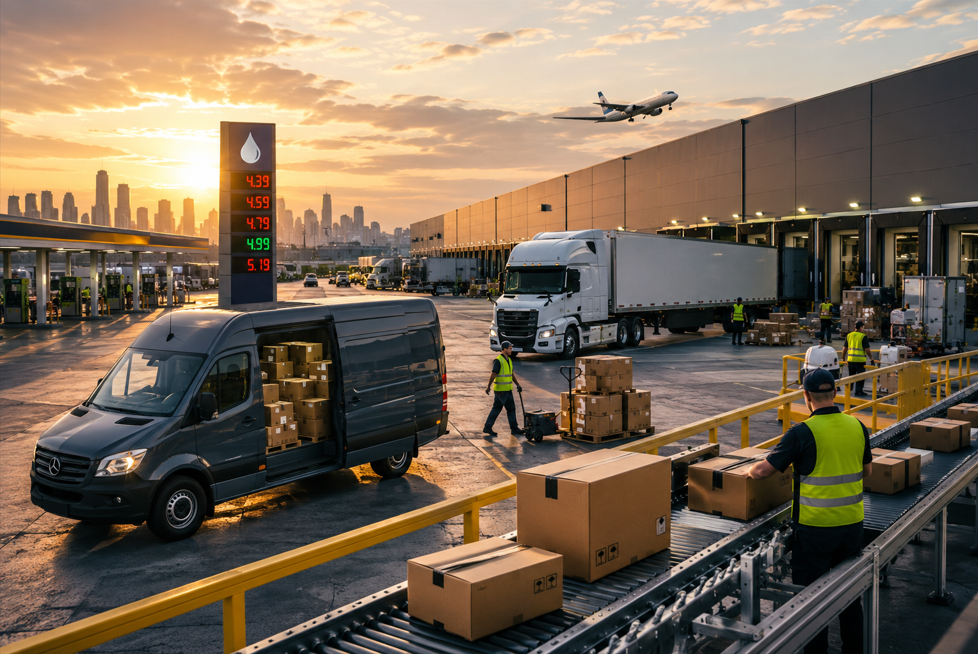
NEW YORK, NY / CorporatePRwire / August 11, 2026 / Rising fuel prices are putting renewed pressure on global supply chains, increasing transportation expenses and forcing businesses to reconsider how they move, store, and deliver products. For Amazon, one of the world’s largest e-commerce and logistics companies, changes in fuel costs can have implications across its extensive network of fulfillment centers, delivery vehicles, freight operations, and third-party logistics providers.
Although fuel prices are only one component of Amazon’s overall operating expenses, sustained increases can influence the cost of moving goods from manufacturers and suppliers to warehouses and, ultimately, customers. As transportation represents a significant part of modern retail logistics, fuel-price volatility has become an important factor for businesses seeking to maintain competitive prices while protecting profit margins.
Fuel Costs and the E-Commerce Supply Chain
Amazon’s business depends on a complex supply chain that combines international shipping, air freight, trucking, fulfillment centers, delivery stations, and last-mile transportation. Every stage requires energy, directly or indirectly.
When diesel and gasoline prices increase, trucking companies may face higher operating costs. Ocean carriers and air freight operators can also experience increased expenses as energy prices rise. These costs can eventually affect the prices businesses pay to transport inventory.
For Amazon and its logistics partners, higher transportation expenses can create pressure to improve efficiency, adjust delivery networks, renegotiate contracts, or pass some costs through to sellers and customers.
The impact is particularly important for products that travel long distances or require multiple transportation stages before reaching consumers.
The Growing Importance of Last-Mile Delivery
The final stage of delivery is one of the most expensive and operationally challenging parts of e-commerce.
Packages must move from fulfillment centers or delivery stations to individual homes and businesses. Unlike traditional bulk transportation, last-mile delivery involves numerous stops, vehicle miles, labor requirements, and route-planning challenges.
Higher fuel prices can therefore increase the cost of each delivery. Companies can respond by optimizing delivery routes, increasing the use of electric vehicles, improving delivery density, and expanding regional fulfillment networks.
Amazon has invested heavily in logistics infrastructure and vehicle electrification as part of its long-term strategy to reduce emissions and improve delivery efficiency. Greater adoption of electric delivery vehicles could eventually reduce exposure to gasoline and diesel price volatility, although the transition requires substantial investment in vehicles, charging infrastructure, and fleet management.
How Higher Transportation Costs Can Affect Sellers
Fuel prices can also affect Amazon sellers.
Many businesses selling products through e-commerce platforms depend on third-party transportation providers to move inventory to fulfillment centers or customers. When freight and fuel costs rise, sellers may face higher expenses before their products even reach a customer.
Businesses have several options. They can absorb the additional cost, increase product prices, reduce packaging expenses, change suppliers, or seek alternative transportation arrangements.
For smaller businesses operating with narrow margins, even relatively modest increases in logistics costs can have a meaningful effect on profitability.
This creates an important challenge for online retailers: maintaining competitive prices while managing increasingly unpredictable supply-chain expenses.
Could Consumers Pay More?
Higher fuel prices do not automatically mean Amazon customers will see immediate increases in retail prices.
Retail prices are influenced by many factors, including product costs, competition, inventory levels, exchange rates, labor expenses, tariffs, consumer demand, and promotional strategies. Businesses may absorb higher transportation costs rather than risk losing customers through higher prices.
However, if elevated fuel prices persist for an extended period, transportation expenses can gradually become part of broader pricing decisions.
Consumers may experience the impact through higher prices on certain products, changes in delivery fees, reduced promotional discounts, or adjustments to delivery options.
The effect is likely to vary significantly by product category. Heavy, bulky, and low-margin products may be more sensitive to transportation costs than lightweight, high-value products.
Supply-Chain Efficiency Becomes More Important
Fuel-price volatility is encouraging companies to look beyond simply negotiating lower transportation rates. Supply-chain efficiency can become a competitive advantage.
Amazon’s large logistics network provides opportunities to optimize inventory placement and reduce unnecessary transportation distances. Locating inventory closer to customers can shorten delivery routes and reduce the amount of fuel required to fulfill individual orders.
Technology can also play an important role. Artificial intelligence, predictive analytics, automated warehouses, and advanced route optimization can help companies forecast demand, position inventory more efficiently, and reduce empty miles.
For large retailers, small improvements across millions of deliveries can translate into significant operational savings.
Electric Vehicles Could Reduce Long-Term Fuel Exposure
The transition toward electric transportation represents another potential solution to fuel-price volatility.
Electric delivery vans can reduce dependence on gasoline and diesel, particularly for predictable urban and suburban delivery routes. However, electrification does not eliminate all transportation costs.
Companies still need to account for vehicle acquisition, charging infrastructure, electricity prices, battery performance, maintenance, and fleet management.
As electric-vehicle technology develops and charging networks expand, however, electrification could give major logistics operator’s greater control over some transportation expenses while supporting broader environmental goals.
Global Energy Markets Remain a Key Risk
Amazon’s supply chain is connected to a much larger global economy. Changes in crude oil prices, refinery capacity, geopolitical tensions, shipping disruptions, and regional fuel shortages can influence transportation costs around the world.
This means companies cannot look at fuel prices in isolation. A rise in energy costs can affect manufacturers, freight companies, warehouses, delivery providers, and retailers simultaneously.
For businesses with global supply chains, diversification and flexibility are becoming increasingly important. Companies may seek multiple suppliers, regional distribution centers, alternative transportation routes, and stronger inventory-management systems to reduce their exposure to unexpected disruptions.
What This Means for the Future of E-Commerce
The relationship between energy prices and e-commerce is likely to become increasingly important as online shopping continues to depend on fast and reliable delivery networks.
Consumers have become accustomed to convenient shipping, competitive prices, and increasingly rapid delivery. Maintaining those expectations becomes more challenging when transportation costs rise.
Amazon’s scale gives it advantages that smaller retailers may not have, including sophisticated logistics technology, a large fulfillment network, and significant purchasing power. Nevertheless, sustained increases in energy and transportation costs can affect the broader economics of e-commerce.
For consumers, the biggest impact may not necessarily appear as a direct fuel surcharge. Instead, it could emerge gradually through product pricing, shipping economics, seller margins, and changes in delivery strategies.