

Chicago, Illinois / 500NewsWire / August 22, 2026 / The rapid growth of financial technology, or fintech, is changing how people and businesses manage money. Digital banking, mobile payments, online lending, automated investment platforms, and artificial intelligence are becoming part of everyday financial services. While this growth is creating new opportunities, it is also bringing significant legal and regulatory challenges for financial companies.
As fintech services expand across markets, regulators are paying closer attention to consumer protection, data security, financial crime, transparency, and corporate responsibility. Companies that once operated primarily as technology providers are increasingly finding themselves subject to rules traditionally associated with banks and other financial institutions.
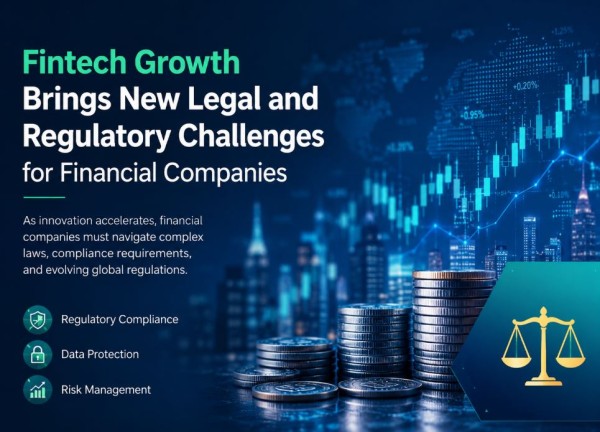
Digital Finance Creates New Compliance Pressure
Fintech companies often operate across multiple markets, making regulatory compliance more complicated. A platform may serve customers in several countries while dealing with different requirements for licensing, financial reporting, consumer protection, and data management.
Regulators are increasingly expecting fintech businesses to understand where their services fall within existing financial laws. Companies that fail to identify regulatory requirements early can face penalties, legal disputes, operational restrictions, or reputational damage.
This is encouraging fintech firms to invest more heavily in legal teams, compliance systems, and risk-management programs as they expand.
Data Privacy Becomes a Major Legal Issue
Financial technology depends heavily on customer data. Digital platforms may collect information about transactions, spending patterns, identity, income, and other financial activities.
The growing use of this information creates important legal questions about how data is collected, stored, shared, and protected. A cybersecurity incident can potentially expose thousands or millions of customers, increasing the legal and financial consequences for a company.
As data privacy expectations continue to rise, fintech businesses are being pushed to strengthen cybersecurity controls and provide clearer information about how customer data is used.
AI Adds Another Layer of Regulatory Risk
Artificial intelligence is becoming increasingly common in fintech. Companies use AI for fraud detection, credit assessments, customer service, financial analysis, and automated decision-making.
However, automated financial decisions can create legal concerns when customers do not understand why a decision was made. Questions surrounding bias, transparency, accountability, and human oversight are becoming increasingly important.
Financial companies using AI must therefore consider not only whether a technology works effectively, but also whether its use complies with applicable financial and consumer-protection requirements.
Regulators Focus on Consumer Protection
The expansion of online financial services has also increased attention on consumers. Digital lending, buy-now-pay-later services, payment applications, and investment platforms can make financial products easier to access, but they can also create risks when terms and fees are difficult to understand.
Regulators are increasingly focused on whether fintech companies provide clear disclosures and fair treatment. Companies may need to review their advertising, contracts, fee structures, complaint procedures, and customer communications to reduce legal risks.
The Future of Fintech Will Depend on Compliance
Fintech innovation is unlikely to slow, but legal compliance is becoming an important part of sustainable growth. Companies that treat regulatory requirements as an afterthought could face greater challenges as their businesses become larger and more visible.
The fintech sector is entering a period where technology, finance, and law are becoming closely connected. Businesses that combine innovation with strong compliance, responsible data practices, cybersecurity, and transparent customer policies may be better positioned to build long-term trust.
As regulators continue adapting financial rules to new technologies, legal strategy will increasingly become a core part of fintech business development rather than simply a response to problems after they occur.