
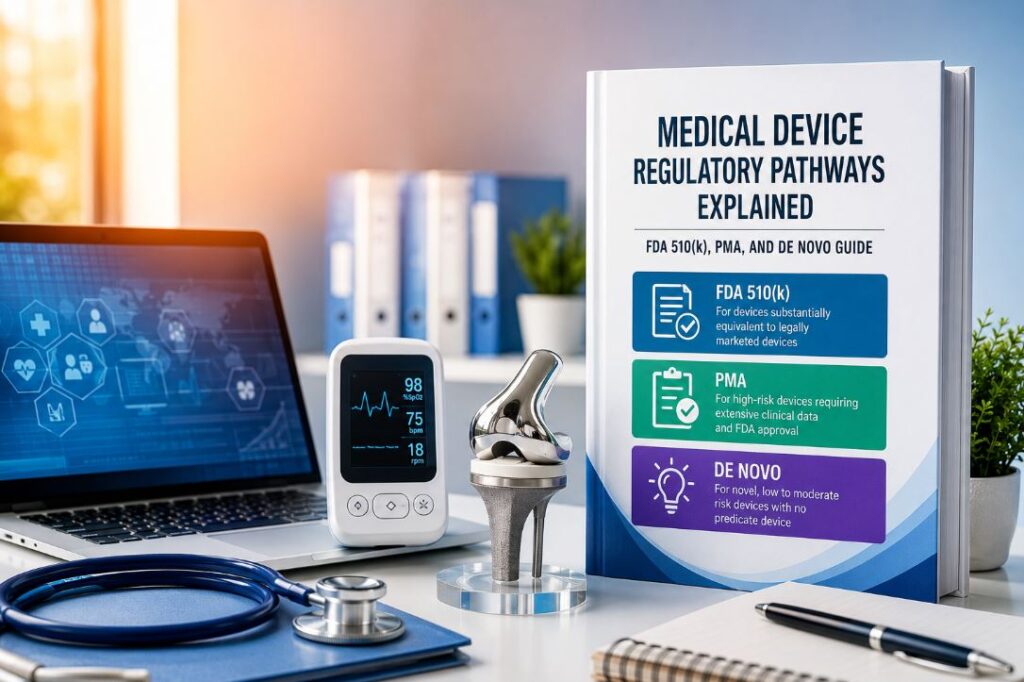
Dallas, TX / 500NewsWire / Getting a medical device from the lab to the patient isn’t just about good engineering. It’s about proving, on paper and in practice, that the device is safe. That proof runs through the U.S. Food and Drug Administration, and the path a company takes depends entirely on how new and how risky the device is.
For founders, investors, and healthcare companies watching the medical device space, understanding these pathways isn’t optional anymore. Regulatory strategy now shapes funding rounds, product roadmaps, and how fast innovation actually reaches patients.
Here’s a plain-language breakdown of the three main routes.
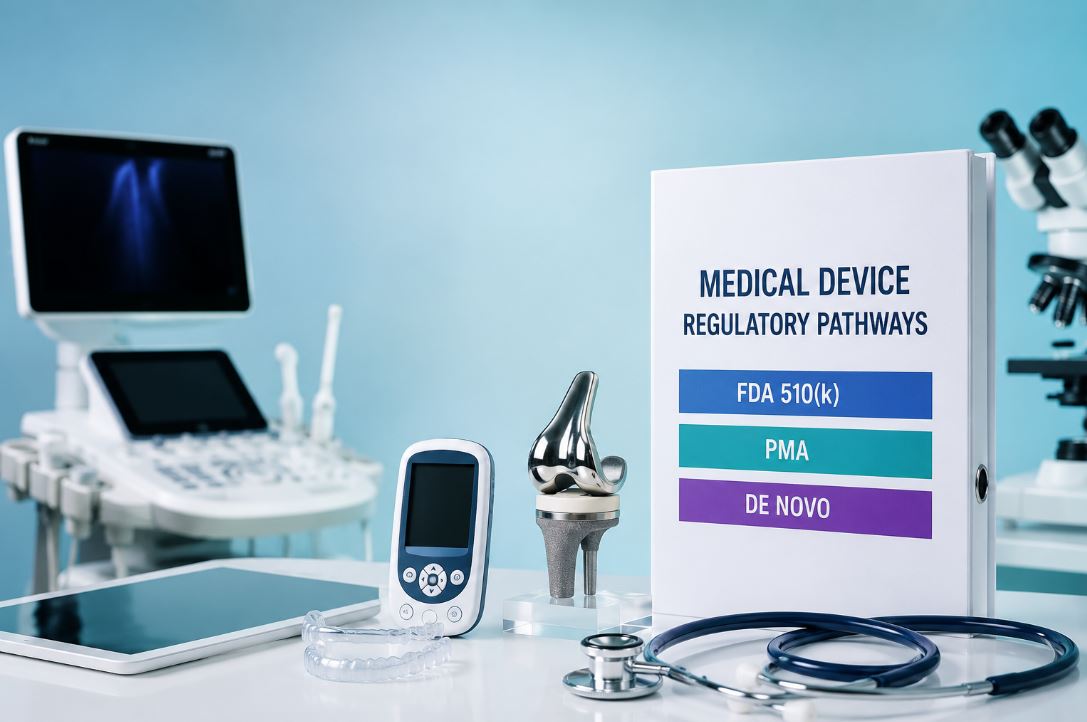
The 510(k) Pathway: The Fast Lane
Most medical devices on the market today got there through the 510(k) pathway. It’s built on a simple idea: if your device is “substantially equivalent” to something already legally sold in the U.S., you don’t need to reinvent the wheel on safety data.
Companies submit evidence comparing their device to an existing “predicate” device, showing similar intended use and technology. If the FDA agrees they’re comparable, clearance can come through in a matter of months rather than years.
This pathway works well for incremental improvements: a slightly redesigned catheter, an updated diagnostic tool, a new version of an existing implant. It’s cheaper and faster, which is why the majority of moderate-risk (Class II) devices go this route.
The PMA Pathway: The Rigorous Route
Premarket Approval, or PMA, is reserved for the highest-risk devices, think pacemakers, implantable defibrillators, or devices that support or sustain life. There’s no predicate to lean on here.
Companies must submit clinical trial data proving the device is both safe and effective, not just similar to something else. The FDA reviews this evidence much like it would a new drug application. That means larger studies, more scrutiny, and timelines that often stretch into years.
It’s the most demanding pathway, but also the one that carries the most credibility once approval is granted. Investors and hospitals alike treat PMA approval as a strong signal of a device’s clinical legitimacy.
The De Novo Pathway: The Middle Ground
What happens when a device is genuinely novel, low-to-moderate risk, but has no predicate to compare it to? That’s where the De Novo pathway comes in.
Introduced to fill a gap in the system, De Novo lets companies request that the FDA create a new device classification and, often, a new predicate for future products. It suits breakthrough technologies, many digital health tools, AI-assisted diagnostics, and novel monitoring devices have used this route in recent years.
Once granted, a De Novo authorization actually becomes a new predicate, opening the 510(k) door for future companies building similar technology.
Why This Matters Beyond Regulatory Teams
These pathways aren’t just legal formalities. They directly affect how quickly a hospital can offer a new treatment, how a startup plans its burn rate, and how insurers evaluate reimbursement. A company that picks the wrong pathway, or misjudges its device’s risk classification, can lose years and millions of dollars.
For healthcare companies and investors, regulatory strategy has quietly become a competitive advantage. Knowing which door to walk through, 510(k), PMA, or De Novo, often determines who gets to market first, and who gets left waiting on approval.
Understanding these three pathways isn’t just useful for regulatory affairs teams anymore. It’s becoming essential knowledge for anyone building, funding, or partnering in the medical device industry.