

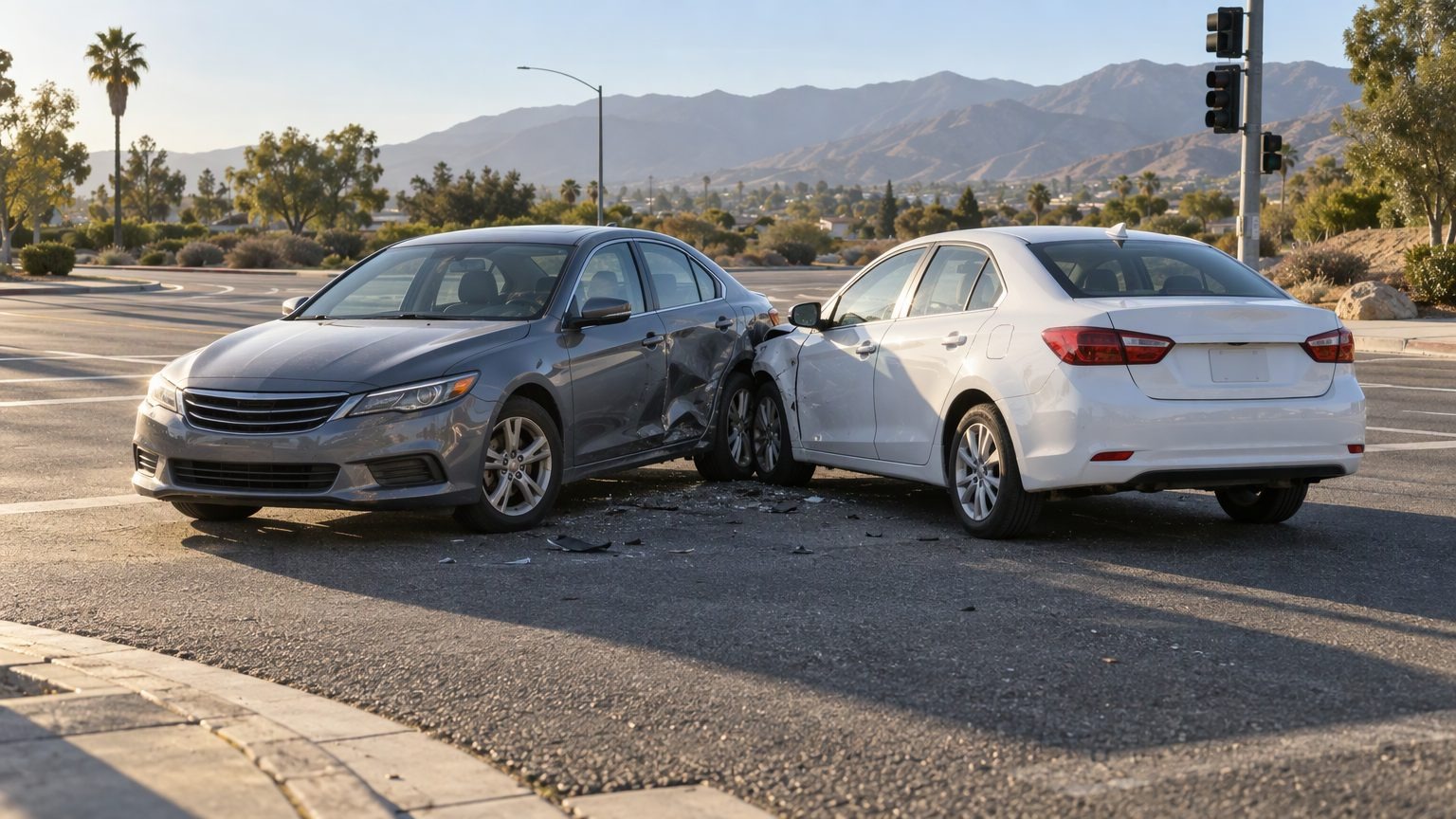
Recoverable damages generally fall by your assigned percentage of fault under California’s pure comparative negligence rule, a point for people researching Kampf, Schiavone & Associates’ injury lawyers. Recovery isn’t barred just because you share responsibility for the accident. According to California Highway Patrol Statewide Integrated Traffic Records System (SWITRS) and Caltrans data, San Bernardino County consistently records over ten thousand traffic injuries and hundreds of fatalities each year. The amount available through a settlement or verdict can change directly when responsibility is disputed in an injury claim arising there.
How California’s pure comparative negligence rule works
The rule reduces damages instead of imposing a complete bar
The California Supreme Court adopted pure comparative negligence in Li v. Yellow Cab Co. (1975) 13 Cal.3d 804. When another party also bears legal responsibility for your injury, your own negligence doesn’t automatically defeat the claim. Law firms such as Kampf, Schiavone & Associates’ injury lawyers will explain the nuances of the state’s pure comparative negligence rule.
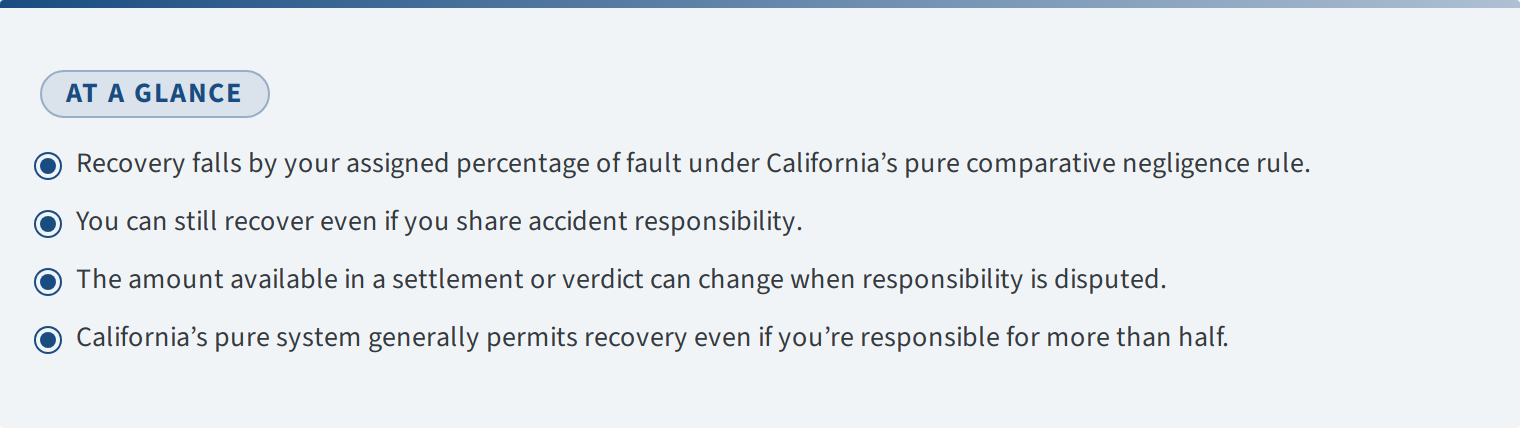
The factfinder determines total proven damages and assigns responsibility. Calculate recoverable damages by reducing total proven damages by your own assigned percentage of fault. For example, if your proven damages total $100,000 and the factfinder assigns you 40% of the fault, your recovery is reduced by 40% ($40,000), leaving an adjusted recovery of $60,000. You must still prove those damages. What you can collect may be limited by available insurance or the defendant’s assets.
A person may recover even when mostly responsible
California’s pure system generally permits recovery when you’re more than half responsible. With 80% fault allocated to you, 20% of proven damages remains available. There is no majority-fault bar. Modified comparative-fault states may instead bar recovery at a 50% or 51% threshold.
California Civil Jury Instructions CACI Nos. 405 and 406 address plaintiff negligence and the allocation of fault among responsible actors. The defendant must prove your negligence and that it was a significant factor in causing harm. Using the evidence, jurors then allocate responsibility among the relevant actors whose conduct caused the injury.
How shared fault changes common injury cases
Car crashes
Your speeding or distraction may still contribute to a collision even when another driver runs a stop sign. A fault argument can draw on traffic violations. Those violations don’t determine every fault percentage; vehicle damage and braking evidence may contradict an account focused only on who entered first.
Pedestrian collisions
A driver may fail to yield while you cross outside a marked crosswalk or enter the road with limited visibility. Neither circumstance settles responsibility. Crossing outside a crosswalk doesn’t automatically eliminate your claim; what matters is each person’s opportunity to perceive and avoid danger.
Premises liability
Someone controlling the property may have known about a spill or damaged pavement while you allegedly overlooked a warning or checked your phone. Fault can turn on poor maintenance as well as visitor inattention. Whether you exercised reasonable care is separate from whether the property controller failed to inspect or repair a hazard, or warn visitors.
Multi-party accidents
Several drivers may share fault in a chain collision. Under California Civil Code section 1431.2 (Proposition 51), liability for non-economic damages, such as emotional distress, is several only—meaning each defendant pays strictly in proportion to their assigned fault percentage. In contrast, joint and several liability still applies to economic damages (such as medical expenses and lost wages), allowing you to recover the full remaining economic award from any single at-fault defendant regardless of their individual fault share.
|
Scenario |
Competing fault arguments |
Particularly valuable evidence |
|
Intersection crash |
Failure to yield versus speeding or distraction |
Signal data and vehicle damage; video and witness positioning |
|
Pedestrian collision |
Driver lookout versus pedestrian location and visibility |
Lighting and sight-distance measurements; clothing and surveillance footage |
|
Premises injury |
Unsafe condition versus failure to notice a warning |
Inspection records and photographs; incident reports and video |
|
Multi-vehicle event |
Several drivers’ actions and reaction times |
Electronic vehicle data and scene measurements, supported by reconstruction analysis |
Evidence that can change a fault percentage
Scene evidence and independent accounts
Record where the debris and vehicles stopped with time-stamped photographs, before cleanup begins. They can also document warning signs or lighting. Video may establish movement and timing, but a restricted camera angle or a missing segment limits what it can prove. Consider each independent witness’s position to determine which details they could reliably observe. Consistency matters when you compare the account with footage or statements made at the scene.
Police reports may record observed conditions alongside statements and diagrams. The officer’s initial opinion doesn’t bind an insurer or civil factfinder, and a citation doesn’t settle civil liability.
Medical and documentary records
Prompt medical records can establish the injury and when symptoms started; compare their diagnosis with your account of how you got hurt. These records alone don’t establish who caused the collision or created the hazard. If treatment was delayed or you had prior injuries, ask whether the dispute concerns the injury’s cause and damages rather than accident fault; incomplete histories make earlier records harder to compare.
Expert analysis and preservation problems
Reconstruction or human-factors analysis may address speed and stopping distance, while engineering review may assess property conditions. Expert opinions depend on reliable underlying evidence. Before footage is routinely overwritten, send businesses a preservation letter asking them to keep it, or ask that a vehicle be kept for inspection before repairs erase physical evidence. Name the location and relevant time window in your preservation request.
What to discuss with personal injury lawyers when fault is disputed
An insurer’s percentage is a position, not a binding judgment
Before proposing a fault percentage, the adjuster compares statements and physical evidence with what each party was required to do. The adjuster also reviews your claimed damages. For a premises claim, the adjuster compares inspection records with evidence of a warning’s visibility; for a collision claim, the adjuster checks a driver’s collision account against vehicle data and footage.
What link does the insurer claim between your injury and the conduct it attributes to you? Treat its allocation as a position for negotiation, not as a binding judgment. Clearer video or an independent witness can support a revised allocation, and expert analysis may challenge assumptions underlying the first offer.

If the parties cannot agree, a judge or jury may determine fault through litigation. Questioning future treatment costs alone doesn’t show anyone was careless at the scene, so ask counsel to separate disputes about how badly you were injured from disputes about who caused the accident. To find another potentially responsible party, look at ownership records or check who employs whom. Establishing a legal basis for liability still requires more than that check.
Questions to resolve before accepting a settlement
Test the percentage and the settlement math
Review the evidence and how the damages were calculated before the amount on the check sways you.
- How does the insurer’s evidence support the fault percentage it assigned?
- How did the adjuster handle photographs that didn’t match the video or what witnesses said?
- Does the calculation include documented economic and non-economic damages before taking anything off for fault?
- Are other drivers or property controllers potentially responsible, or could an employer or another entity share liability?
- Which rights will you lose if you accept this settlement?
Account for timing and unresolved losses
An early offer may arrive before you know the full treatment course or future work limitations, leaving total medical expenses uncertain. Once you sign the release, expect the claim it covers to be over. Don’t assume California’s standard two-year personal injury statute of limitations applies to every case; claims against public entities require an administrative claim within six months under California Government Code section 911.2, and minors’ claims follow tolling rules under Code of Civil Procedure section 352. Check disputed fault, statute deadlines, and unresolved losses before you sign.
A percentage can change the final recovery
Although California allows compensation when you share responsibility, your assigned fault percentage can substantially change what you get through a settlement or verdict. Preserve evidence before it’s gone. An adjuster’s first fault allocation isn’t settled law, so check each allegation against the record and review the full damages calculation to see what compensation the evidence still supports before signing a release.