
Public Instagram engagement reports offer new ways to organize observable information, but incomplete activity records require careful interpretation.
As businesses, researchers, and individuals increasingly rely on social media information, distinguishing observable online activity from assumptions about personal behavior has become an important part of responsible digital research.
Snoopreport, a service for monitoring selected publicly visible Instagram actions, provides weekly and monthly reports that organize detected likes, follows, and unfollows from public profiles. Its reporting model illustrates both the usefulness of structured social media observations and the limitations that users must understand before interpreting them.
An Instagram activity tracker can help users review changes that are difficult to reconstruct through Instagram’s standard interface. However, the presence of a detected interaction does not establish a person’s intentions, relationships, or private circumstances.
What Public Activity Reports Can Show
Instagram users can access some engagement information on individual public posts and profiles. What they generally cannot access through the app is a consolidated historical record of another account’s recent likes and following changes.
Snoopreport addresses this gap by organizing detectable activity into reporting periods.
Users enter an eligible public Instagram username without providing their own Instagram credentials. The service then collects certain publicly observable interactions and presents them in weekly and monthly reports.
These reports can include posts and reels liked by the tracked account, new follows, and unfollows.
The information may help researchers identify recurring themes or changes across a public account’s observable activity.
It does not provide access to private accounts, direct messages, Story viewers, or private communications.
Coverage and Timing Require Context
A fundamental limitation of activity monitoring is that publicly observable information is not necessarily complete.
Snoopreport states that its reports may capture up to 75% of a public account’s detectable actions. Actual coverage can vary, and a missing interaction cannot establish that the action never occurred.
Reporting periods also matter.
When a report identifies a recent follow, it indicates that the action was detected within a particular week or month. It does not establish the exact time the person followed the account.
These distinctions are important because incomplete records can encourage inaccurate conclusions when interpreted without context.
Someone may follow a public account because of professional research, personal curiosity, a recommendation, or an accidental tap. The action itself cannot identify the motivation.
Privacy Principles Apply Beyond Private Information
The NIST Privacy Framework provides organizations with a structured approach to identifying and managing privacy risks.
Although Snoopreport focuses on publicly observable information, users still have responsibilities when collecting, interpreting, sharing, or relying on data about other people.
Businesses should consider the purpose of their research and avoid treating social media interactions as reliable evidence of character, employment suitability, or other consequential personal attributes.
A record of likes or follows is not a substitute for direct verification or professionally appropriate due diligence.
Product Options and Reporting Features
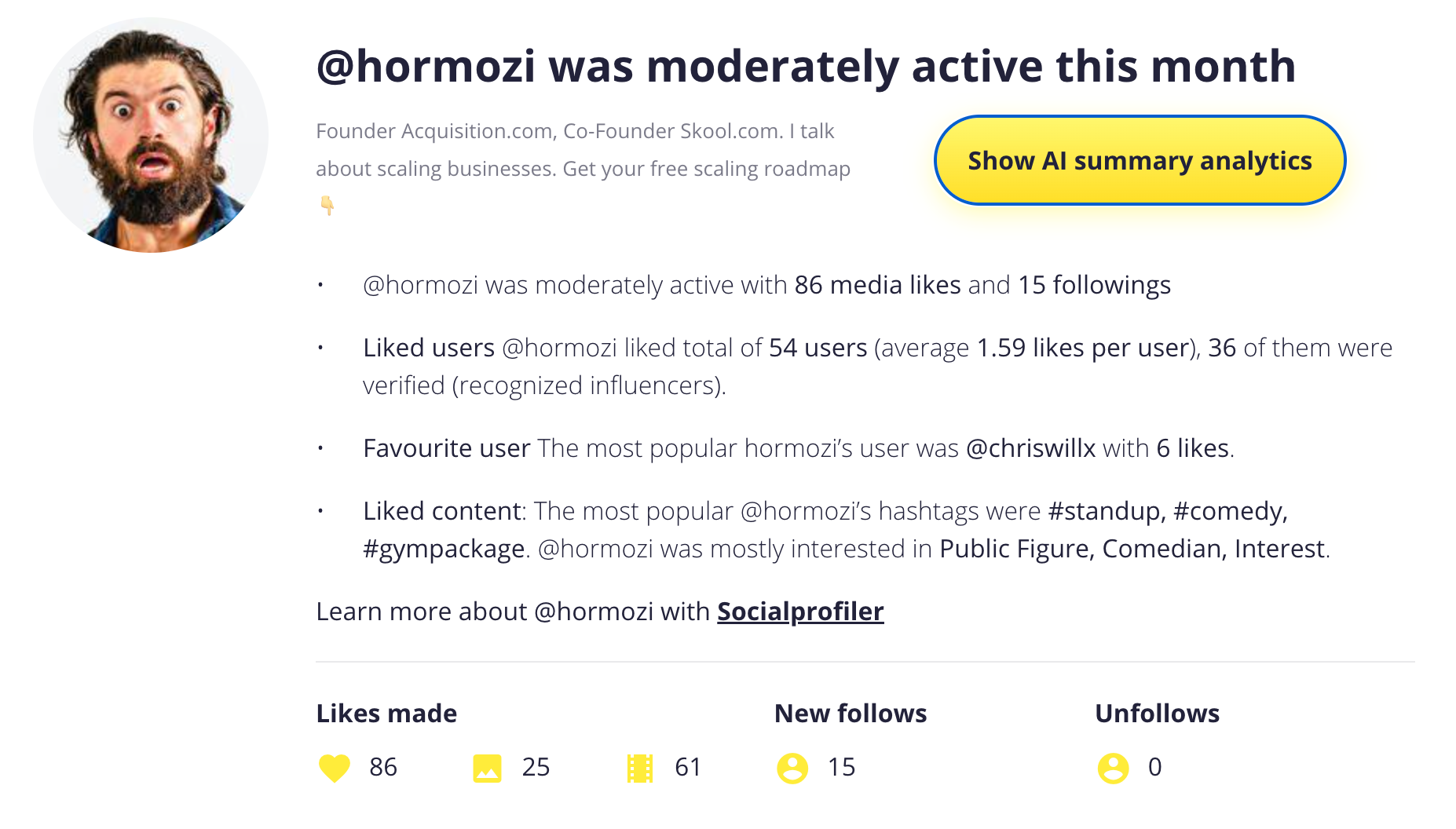
Snoopreport offers subscription plans beginning at $4.99 per month for two tracked public accounts.
Higher tiers support additional accounts, while optional AI Summary plans provide generated interpretations of potential interests based on detected activity.
AI-generated interpretations are not statements of verified intent. They remain dependent on the completeness and relevance of the underlying observations.
Retrospective reports are also available for eligible earlier periods at a separate price.
These options are designed to make public activity easier to review, but they do not remove the underlying limits of observation.
Responsible Use Begins With Clear Expectations
A useful reporting system should help users distinguish what was actually detected from what remains unknown.
Snoopreport’s public-account approach illustrates that distinction: reports can identify observable patterns without claiming access to restricted information or offering definitive explanations of another person’s behavior.
For organizations conducting legitimate social media research, the most reliable approach combines narrowly defined objectives, appropriate privacy considerations, and independent corroboration.
Additional information about the service and its Snoopreport reporting options is available on the company’s website.
About Snoopreport
Snoopreport is a subscription-based service that organizes detectable likes, follows, and unfollows from public Instagram accounts into weekly and monthly reports. It does not require users to connect their personal Instagram credentials and does not provide access to private accounts or messages.
Website: https://snoopreport.com/