

Facial comparison services can help identify possible social media matches, while accuracy, consent, and biometric-data requirements remain essential considerations.
The use of photographs to investigate possible online impersonation has introduced new questions about the relationship between digital safety, facial comparison technology, and personal privacy.
Face2social, a photo-based social media search service, enables users to upload a photograph and review possible profile matches across supported platforms. The service is intended to help identify potentially related public social media accounts when a name or username is unavailable.
However, facial similarity should not be treated as verified identification, and the use of biometric information may be subject to legal restrictions depending on the jurisdiction and circumstances.
How Photo-Based Profile Search Works
Traditional reverse image search generally looks for the same picture or visually similar images across websites.
A facial comparison service uses a different approach.
Rather than requiring an identical photograph, Face2social analyzes visible facial characteristics and compares them with faces in images available for analysis.
This may help surface possible matches when someone uses different photographs on different social media platforms.
The process can be relevant in situations involving potential impersonation, including suspicious dating profiles and accounts that may have reused another person’s photographs.
A catfish reverse image search can provide possible leads for further investigation. It cannot independently establish the identity, honesty, or intentions of the person operating an account.
Free Preview and Result Limitations
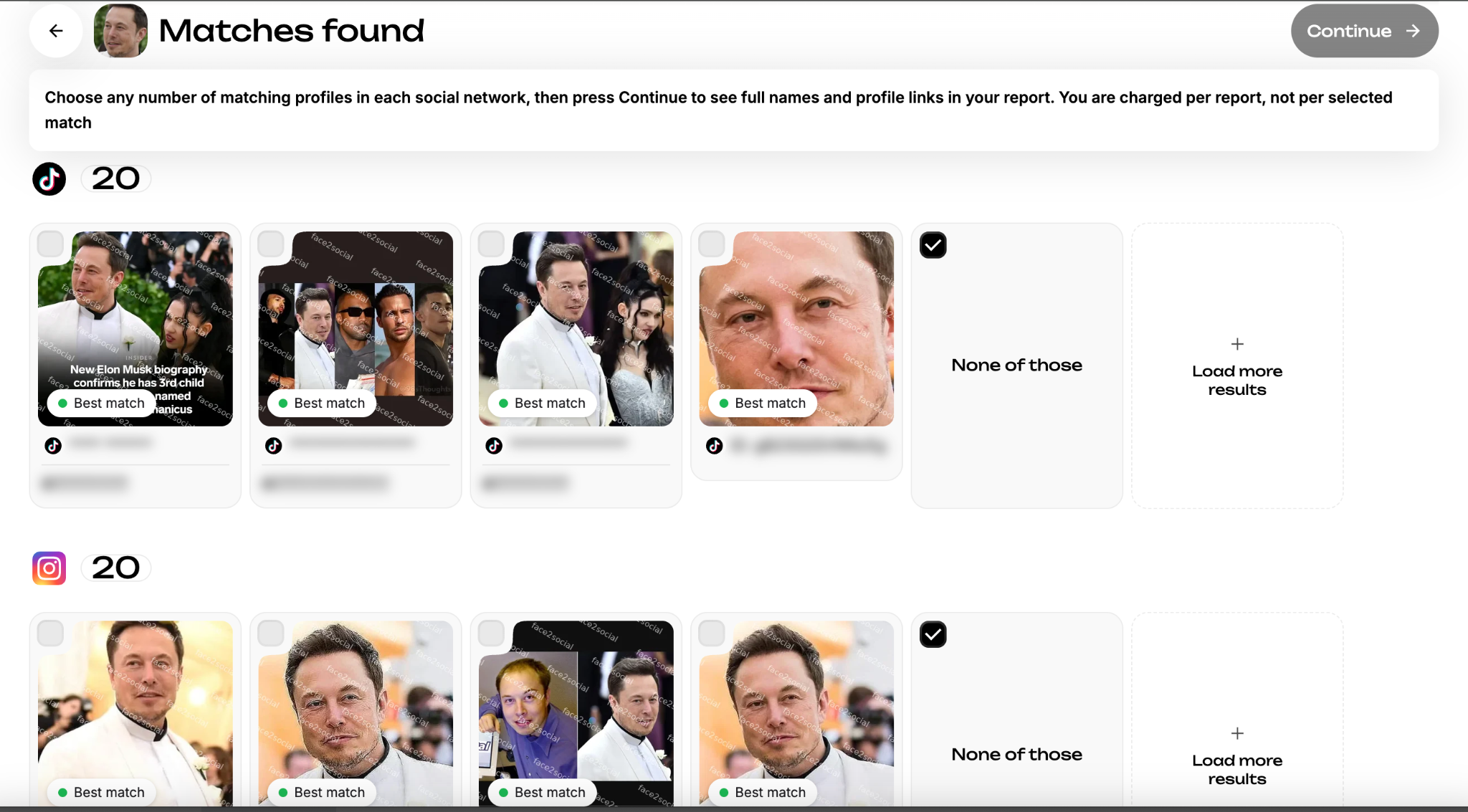
Face2social allows users to begin with an uploaded photograph or screenshot containing a visible face.
After registration, a free preview shows whether potential matches were found, with blurred result information and estimated similarity indicators.
Users may then choose a paid option to reveal available profile details and links. Advertised access begins at $3.99, with subscription pricing and billing terms presented before purchase.
The search may fail to find a relevant profile even when one exists. Image quality, facial visibility, changes in appearance, and the available comparison data all affect results.
A high similarity score does not prove that two accounts belong to the same individual. Likewise, a missing result is not evidence that a person lacks social media accounts.
Biometric Information Raises Distinct Legal Questions
Facial comparison differs from ordinary text or image searching because it analyzes physical characteristics that may constitute biometric information.
In its 2023 policy statement on biometric information, the Federal Trade Commission identified privacy, security, accuracy, and potential discrimination concerns associated with biometric technologies.
The FTC also warned that misleading or unsupported claims about biometric systems may raise issues under consumer protection law.
Depending on the location and use case, businesses and individuals may need to consider notice, consent, obligations, and other applicable requirements before processing facial information.
The existence of a publicly accessible photograph does not, by itself, resolve those legal questions.
Face2social states that its service is unavailable in certain jurisdictions because of biometric-data and privacy regulations.
Online Safety Does Not Eliminate the Need for Verification
When a user encounters a potentially suspicious dating or social media profile, a photograph may provide a starting point for research.
Possible matching accounts can then be compared with the information provided by the person concerned.
Discrepancies may justify further questions, but they do not automatically establish impersonation. People frequently use different names, photographs, and usernames for legitimate reasons.
Additional warning signs, such as requests for money, pressure to communicate outside trusted platforms, or demands for sensitive information, often provide more meaningful context.
A responsible investigation should rely on multiple sources rather than a single facial comparison result.
Balancing Useful Research With Privacy
Photo-based searches can help users explore publicly available information, but they also create opportunities for misuse.
Facial search should not be used for harassment, stalking, unauthorized surveillance, or regulated screening activities.
Users should ensure that they have an appropriate legal basis for processing photographs and comply with relevant consent and privacy requirements.
Face2social provides possible profile matches, not an identity certificate or a determination that an account is fraudulent.
The company describes its Face2social service as a search tool with a free preview and optional paid access to available matching information.
As facial search becomes more accessible, accurate explanations of technology and clear privacy boundaries remain central to responsible use.
About Face2social
Face2social is a photo-based social media search service that compares facial characteristics with available social media images to identify possible profile matches. The service offers a free preview after registration and paid options for revealing available account details.
Website: https://face2social.com/