
A Major Border and Humanitarian Emergency
NEW YORK, NY / CorporatePRwire / August 03, 2026 / Spain’s North African enclave of Ceuta has experienced a major migration crisis after tens of thousands of people attempted to cross from Morocco into the Spanish territory.
Recent reports indicate that approximately 60,000 people attempted to enter Ceuta during the sudden surge.
The large-scale movement placed enormous pressure on Ceuta’s border authorities, emergency services, healthcare system and migrant reception facilities. Public areas, including parks and streets, became crowded as local officials worked to provide emergency assistance and restore normal conditions.
Spanish police, border security personnel and military forces were deployed to support local authorities and strengthen control of the border.
How Did Migrants Attempt to Enter Ceuta?
People attempted to reach Ceuta through both land and sea routes.
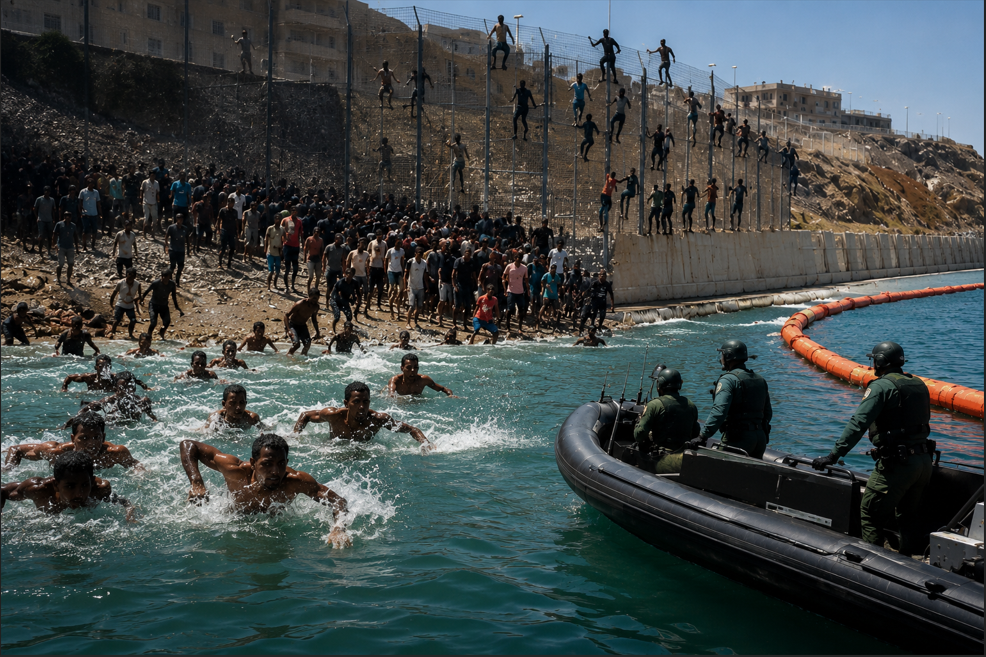
Some crossed near the Tarajal border area, while others attempted to swim around coastal barriers. Groups were also reported near beaches, border crossings and sections of the security fence.
The sea route was particularly dangerous. Migrants faced strong currents, exhaustion, overcrowding and difficult conditions in the water. The rapid movement of large groups also created dangerous and chaotic conditions near the border.
How Many People Died?
The migration crisis has resulted in a serious humanitarian tragedy.
Spanish authorities reported at least 72 deaths connected to the mass crossing.
Many of the deaths were linked to drowning during attempts to reach Ceuta by sea.
The loss of life has renewed concerns about the dangers of irregular sea crossings and the risks faced by people travelling without safe transport or adequate safety equipment.
How Many Migrants Returned to Morocco?
Most of the people involved in the mass crossing later returned to Morocco.
Approximately 69,000 people returned. Some migrants reportedly returned voluntarily because of limited access to food, overcrowded facilities and the difficulty of travelling onward to mainland Spain.
Others were directed or escorted back toward the border by authorities.
Approximately 3,000 to 5,000 people remained in Ceuta after most of the migrants returned. Some stayed in temporary facilities, public areas or nearby hills, while authorities continued searching for people outside official reception centers.
Children and Minors Require Special Protection
The crisis created additional challenges because many children and young people were among those who reached Ceuta.
More than 860 minors were reported to be receiving special protection and assistance. Under Spanish law, unaccompanied children have legal protections that differ from those available to adult migrants.
Local authorities faced increased pressure to provide safe accommodation, healthcare, food, legal support and child-protection services.
The large number of minors made the humanitarian response more complex and increased calls for support from Spain’s central government and the European Union.
Spain Installs a 500-Metre Floating Barrier
Spain responded to the increase in sea crossings by installing a 500-metre floating security barrier near the Tarajal border area.
The barrier was introduced as an emergency measure to strengthen maritime border control and reduce the number of people attempting to reach Ceuta by swimming.
Spanish security forces increased patrols along the coast and around the border. Additional personnel were deployed to support police operations and help restore order.
Authorities said the measures were intended to prevent further large-scale crossings while emergency services continued providing medical and humanitarian assistance.
Medical Services Come Under Pressure
The sudden arrival of thousands of people placed significant pressure on Ceuta’s healthcare system.
More than 1,000 migrants received medical treatment during the crisis. Medical teams treated people suffering from exhaustion, injuries, dehydration and health problems associated with the difficult crossing.
Migrant reception centres also became overcrowded, forcing authorities to use additional facilities and public spaces.
The crisis created serious logistical challenges for Ceuta, a small territory with limited space and resources.
Why Is Ceuta an Important Migration Route?
Ceuta is often viewed as a possible entry point into Europe because it is Spanish territory located on the northern coast of Africa.
The city covers approximately 20 square kilometres and is separated from mainland Spain by the Strait of Gibraltar. Together with Melilla, Ceuta forms one of the European Union’s only land borders with Africa.
For many years, people from Morocco, sub-Saharan Africa and other regions have attempted to reach Ceuta in the hope of finding safety, employment or better economic opportunities. Some also hope to apply for international protection or continue to mainland Spain.
However, entering Ceuta does not automatically provide permission to remain in Spain or travel freely to other European countries. Migrants may be subject to immigration procedures, legal reviews or return decisions.
Comparison with the 2021 Ceuta Crisis
The latest migration surge has been compared with the major Ceuta crisis of May 2021.
During that event, approximately 8,000 people entered Ceuta within two days amid diplomatic tensions between Spain and Morocco.
The latest crisis involved a much larger number of attempted crossings and placed greater pressure on local services, border security and humanitarian organisations.
It also renewed debate about border management, cooperation between Spain and Morocco, people-smuggling networks and the European Union’s role in responding to migration at its external borders.