

WASHINGTON / CorporatePRwire / August 31, 2026 / The U.S. Senate is approaching a key procedural test for the Digital Asset Market Clarity Act, but significant uncertainty remains over whether the legislation can advance through Congress before the end of the year.
The legislation, known as the CLARITY Act and identified as H.R. 3633, is designed to establish a broader federal framework for digital-asset markets and clarify regulatory responsibilities between the Securities and Exchange Commission (SEC) and the Commodity Futures Trading Commission (CFTC). The bill has already passed the House and was reported by the Senate Banking Committee with an amendment.
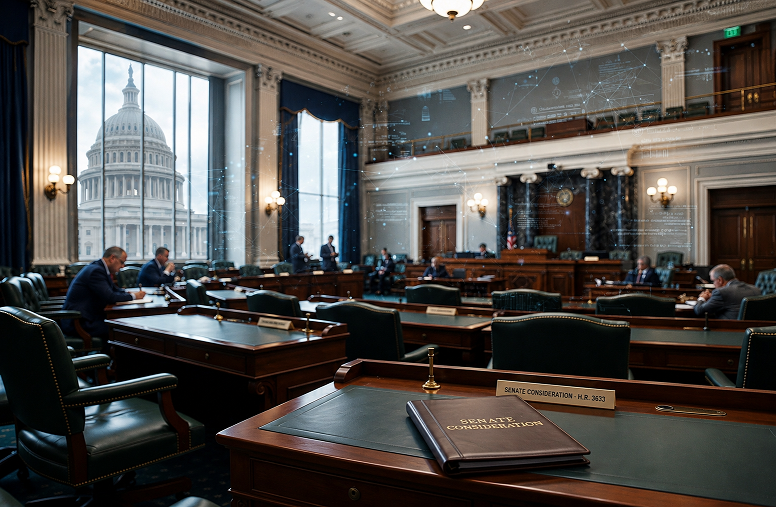
The Senate is currently scheduled to hold a cloture vote on September 15 concerning the motion to proceed to H.R. 3633. The vote is important, but it should not be confused with a vote on final passage of the legislation.
September Vote Is Only a Procedural Step
Cloture is a Senate procedure used to limit debate. For legislation, invoking cloture generally requires 60 votes.
If the September 15 motion receives the necessary support, the Senate could move toward formally considering the CLARITY Act. Senators could then debate the legislation, consider amendments and face additional procedural steps before any final Senate vote.
If the motion does not receive enough votes, the legislation would not automatically disappear. Instead, its progress through the Senate would be blocked through that procedural route, leaving lawmakers with the possibility of continuing negotiations or pursuing another path later.
That distinction is important because descriptions of September 15 as a final “CLARITY Act vote” can give a misleading impression of where the legislation stands.
Bipartisan Support Remains Important
The 60-vote threshold means the legislation would need support beyond the Senate’s Republican members if all seats are filled and voting along party lines.
That makes negotiations with Democratic senators and other potential supporters an important part of the bill’s path forward.
Lawmakers have been working on a number of unresolved provisions. Recent reporting has highlighted disagreements involving ethics requirements, illicit-finance safeguards and other elements of the proposed market-structure framework.
The Senate Banking Committee previously advanced the legislation in a bipartisan 15-9 vote. Updated legislation released in July incorporated work from both the Senate Banking and Agriculture Committees.
What the Legislation Seeks to Change
The CLARITY Act is intended to create clearer federal rules for digital assets and establish regulatory boundaries between the SEC and CFTC.
Under the legislation, digital commodities and related market activities would receive a framework involving CFTC oversight, while the SEC would retain authority over certain activities involving securities and digital assets.
The precise effect of the legislation would depend on the final text approved by Congress. Because the Senate is still considering the measure, its provisions could change before any final version reaches the president.
For businesses operating in digital-asset markets, the broader issue is regulatory clarity. Companies currently have to assess their obligations under existing securities, commodities and other federal laws while policymakers continue debating a more comprehensive statutory framework.
A Compressed Legislative Calendar
The timing adds another challenge.
Congress is approaching the 2026 midterm elections, leaving lawmakers with a limited number of legislative days to resolve outstanding disagreements and complete the Senate process.
Even a successful September 15 cloture vote would therefore not guarantee that the CLARITY Act becomes law. The Senate would still have to consider the legislation, potentially make changes and vote on final passage. If the Senate version differs from legislation previously approved by the House, additional congressional action could also be required.
As a result, the September vote should be viewed as an important procedural milestone rather than the final decision on the legislation.
Regulatory Action Could Continue Separately
The congressional debate is also taking place alongside continuing work by federal regulators.
CFTC Chairman Michael Selig has indicated that the agency could pursue additional cryptocurrency rulemaking using existing authority if Congress does not complete market-structure legislation. Such regulatory action would not be equivalent to the comprehensive statutory framework contemplated by the CLARITY Act, but it illustrates that digital-asset policy is continuing to develop even while Congress considers legislation.
The interaction between congressional legislation and existing agency authority could therefore remain an important issue for the digital-asset sector regardless of the outcome of the September procedural vote.
What to Watch on September 15
The immediate question is whether supporters of H.R. 3633 can secure enough votes to invoke cloture on the motion to proceed.
A successful vote would allow the Senate process to move forward, but it would not enact the CLARITY Act. A failed vote would make near-term progress more difficult, although it would not formally eliminate the legislation.
For now, the bill remains active but faces a demanding path. The September 15 procedural vote is likely to provide the clearest indication yet of whether Senate negotiations have produced enough support to move the legislation toward full consideration.
Editorial Note: This article reports on legislative developments based on publicly available government records and current reporting. It is provided for informational purposes and does not constitute legal, financial or investment advice.