
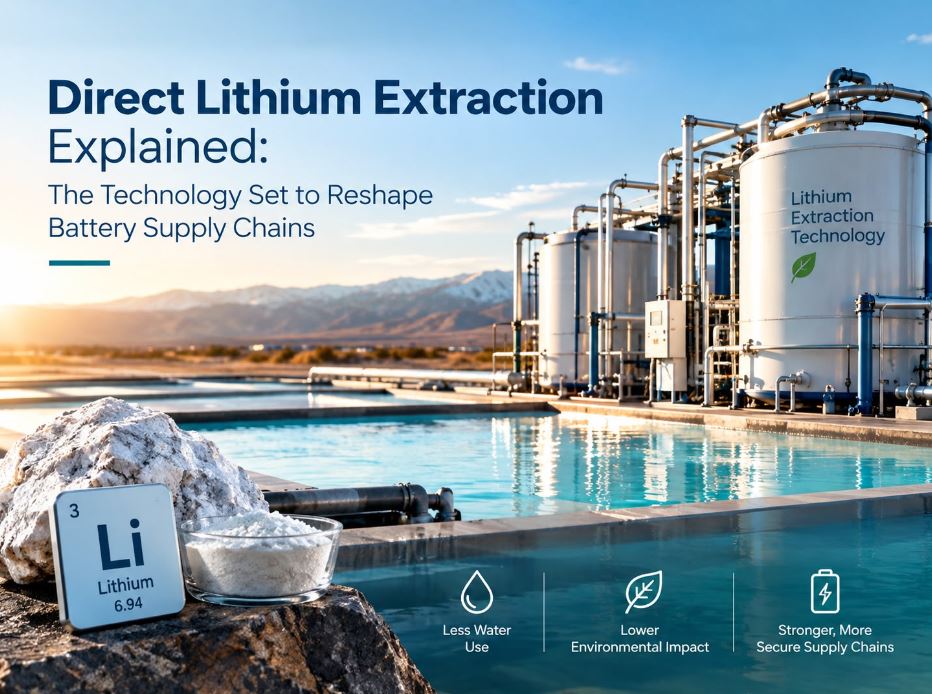
Chicago, IL / 500NewsWire / September 16, 2026 / Lithium mining is getting a major upgrade, and it’s happening faster than most people realize. A new method called Direct Lithium Extraction, or DLE, is quietly changing how companies pull lithium out of the ground. Instead of waiting months for giant evaporation ponds to do the work, DLE can pull lithium out of brine in a matter of hours or days.
This matters right now. In June 2026, South Korea’s POSCO Holdings signed a deal with Australian company Anson Resources to build a DLE demonstration plant in Green River, Utah. It’s POSCO’s first DLE project on U.S. soil, and it’s part of a much bigger race to secure lithium closer to home instead of relying on a handful of overseas suppliers.
What Exactly Is Direct Lithium Extraction?
Lithium has traditionally been mined two ways: digging up hard rock, or pumping salty underground water (brine) into massive open-air ponds and letting the sun evaporate it over 12 to 24 months. That old evaporation method is slow, eats up huge amounts of land and water, and only recovers 40 to 60 percent of the lithium in the brine.
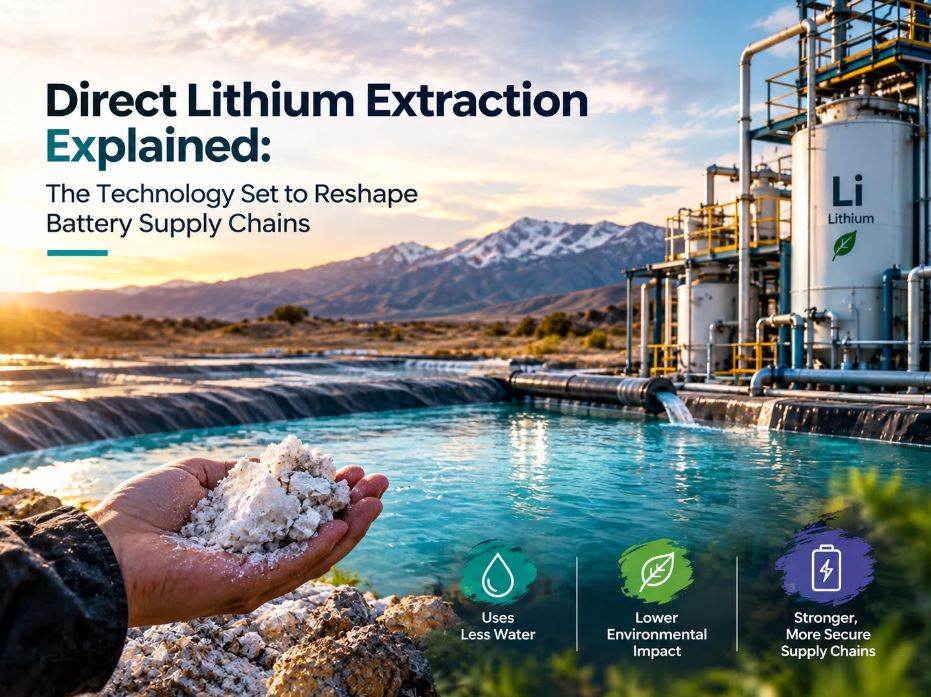
DLE skips the ponds entirely. Special materials, sorbents, membranes, or chemical solutions grab lithium ions directly out of the brine while sending the rest of the water back underground. The result is a process that finishes in hours or days rather than years, with recovery rates often topping 80 to 90 percent.
Why It’s Suddenly a Big Deal
Electric vehicles and battery storage systems need lithium, and demand keeps climbing faster than old-school mines can keep up. Industry researchers at IDTechEx now expect the global lithium supply market, boosted heavily by DLE, to reach roughly $52 billion by 2036. Some market analysts even project the DLE segment itself growing at close to 20 percent a year over the next decade, far outpacing traditional lithium mining.
There’s also a resource angle. Because DLE is more selective, it can work with brines that were previously considered too weak or too contaminated to bother with, including geothermal and oilfield brine. That opens up new lithium sources in places that never had a lithium industry before.
The Six Ways Companies Are Doing It
There isn’t one single DLE technology. Companies are currently working with six main approaches: adsorption, ion exchange, membrane separation, solvent extraction, electrochemical extraction, and chemical precipitation. Adsorption, which uses aluminum-based materials to capture lithium, is currently the most proven and is already running commercially in Argentina and China through major players like Rio Tinto and Eramet.
The Catch: It’s Not a Silver Bullet Yet
DLE isn’t fully mature everywhere. Every brine is chemically different, so a method that works well in one location may need to be redesigned for another. Costs, energy use, and long-term reliability at large scale are still being tested. That’s exactly what POSCO’s new Utah plant is meant to prove out, with full technology validation targeted for 2028.
What to Watch Next
Europe is hosting its first major Direct Lithium Extraction Summit this year, bringing together engineers, investors, and regulators to compare technologies and speed up permitting. As more pilot plants like the one in Utah come online, DLE is on track to become one of the defining stories in battery supply chains over the next few years.