
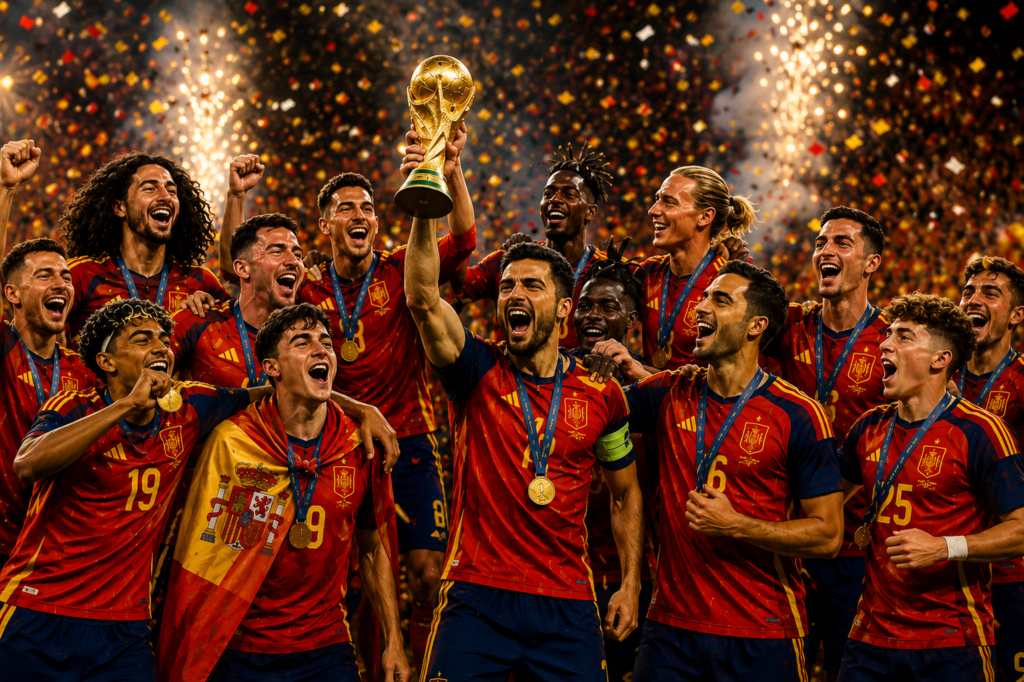
NEW YORK, NY / CorporatePRwire / July 21, 2026 /The FIFA World Cup 2026 Final delivered a memorable contest as Spain defeated defending champions Argentina 1-0 after extra time at New York New Jersey Stadium. The match showcased tactical discipline, defensive resilience, and moments of individual brilliance, with Ferran Torres scoring the decisive goal in the 106th minute to secure Spain’s second FIFA World Cup title.
Match Overview
Both teams entered the final unbeaten and among the tournament favorites. Spain dominated possession from the opening whistle, controlling the midfield and creating numerous scoring opportunities. Argentina, meanwhile, relied on its disciplined defense and goalkeeper Emiliano Martínez to keep the score level for more than 100 minutes.
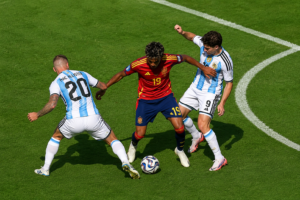
Despite Spain’s attacking pressure, the first half ended goalless. Argentina struggled to create clear cut chances as Spain’s midfield effectively limited the influence of Lionel Messi and Julián Álvarez. Throughout the match, Spain maintained greater control of possession and dictated the tempo, while Argentina focused on staying compact and searching for counterattacking opportunities.
Spain’s Outstanding Performers
Ferran Torres-Match Winner
Introduced as a substitute, Ferran Torres transformed the game with his energy, intelligent movement, and clinical finishing. In the 106th minute, he calmly converted Nico Williams headed pass following an excellent cross from Pedro Porro. His decisive goal secured Spain’s place in football history and highlighted the tremendous impact of Spain’s substitutes.
Rodri-Midfield General
Rodri controlled the tempo throughout the match with exceptional passing, tactical awareness, and composure under pressure. His ability to intercept passes and break up Argentina’s attacks prevented the South Americans from establishing any rhythm. His outstanding tournament performances earned him the FIFA World Cup Golden Ball as the competition’s best player.
Nico Williams-Super Substitute
Nico Williams injected pace and creativity after coming off the bench. His intelligent movement consistently troubled Argentina’s defense, and his perfectly timed header across the goal created the opportunity for Ferran Torres’ match-winning strike.
Pedro Porro
Pedro Porro delivered an excellent performance at right-back, contributing at both ends of the pitch. His accurate cross initiated the winning move and capped another outstanding display during Spain’s successful World Cup campaign.
Unai Simón
Spain goalkeeper Unai Simón enjoyed a relatively quiet afternoon thanks to his team’s defensive organization. Nevertheless, he remained alert whenever called into action and preserved another valuable clean sheet.
Argentina’s Key Performers
Emiliano Martínez
Emiliano Martínez was unquestionably Argentina’s standout performer. He produced several outstanding saves to deny Lamine Yamal, Dani Olmo, and Nico Williams, keeping Argentina in the match until extra time. Without his remarkable performance, Spain could have secured victory much earlier.
Lionel Messi
Playing in what may have been his final FIFA World Cup appearance, Lionel Messi worked tirelessly to inspire his team. However, Spain’s disciplined midfield and defensive structure limited his influence, preventing him from producing the magical moments that have defined his legendary career.
Enzo Fernández
Enzo Fernández endured a difficult evening. His second yellow card late in normal time reduced Argentina to ten players for extra time, a setback that significantly affected the team’s ability to compete during the decisive stages of the match.
Tactical Analysis
Spain’s victory was built on patient possession, relentless pressing, and intelligent tactical adjustments. Rodri orchestrated play from midfield, while Lamine Yamal, Dani Olmo, and Nico Williams stretched Argentina’s defensive shape with their movement and creativity.
Argentina remained well organized defensively and attempted to exploit counterattacking opportunities. However, Spain’s high pressing and midfield dominance prevented them from building sustained attacking moves. The introduction of fresh attacking players proved decisive, allowing Spain to maintain its intensity throughout the full 120 minutes.
Drama in Extra Time
With the score still locked at 0–0 after 90 minutes, the final entered extra time, where the intensity reached another level. Despite playing with ten men, Argentina defended courageously and continued searching for opportunities on the counterattack. Spain remained patient, circulating possession and probing for an opening.
The breakthrough finally arrived in the 106th minute when Pedro Porro delivered a precise cross into the penalty area. Nico Williams intelligently headed the ball across goal, allowing substitute Ferran Torres to finish with a composed first-time strike and give Spain a deserved 1-0 lead.
Argentina responded with determination in the closing minutes, committing more players forward in search of an equalizer. However, Spain’s disciplined defense, excellent game management, and calmness under pressure ensured they protected their narrow advantage until the final whistle, securing a historic FIFA World Cup triumph.
Conclusion
Spain’s victory in the FIFA World Cup 2026 will be remembered as a showcase of tactical excellence, defensive resilience, and outstanding teamwork. Ferran Torres’ decisive extra-time goal secured a 1-0 victory over Argentina in the final at MetLife Stadium in New Jersey, earning La Roja their second FIFA World Cup title.
Rodri controlled the midfield with another composed and influential performance, while Spain’s tactical discipline, squad depth, and effective substitutions proved crucial throughout the tournament. Although Argentina fell short in its bid to defend the title, Emiliano Martínez delivered several outstanding saves, and Lionel Messi’s leadership kept the reigning champions competitive until the final whistle.
Spain’s campaign was one of the most dominant in World Cup history. The team won seven of its eight matches, scored 14 goals, and conceded just one goal, recording seven clean sheets along the way. Their combination of attacking quality, defensive solidity, and consistent performances made them deserving world champions and brought the FIFA World Cup 2026 to a memorable conclusion.