
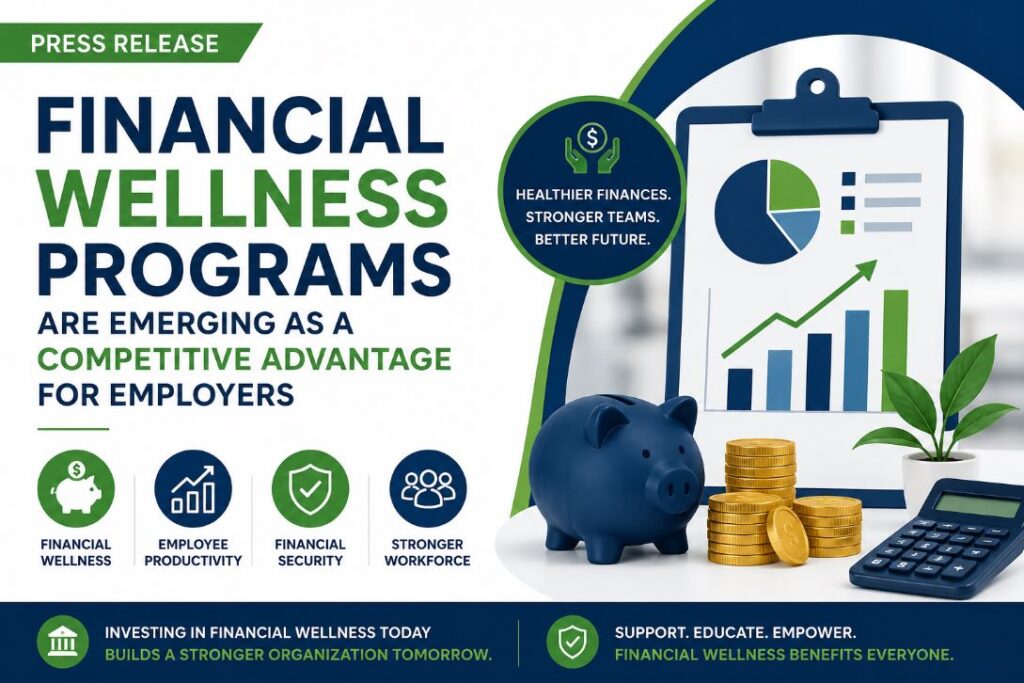
New York, NY / 500NewsWire / July 10, 2026 / Money stress isn’t staying at home anymore. It’s showing up at the office, in Zoom calls, and in your best employees’ decision to quietly update their resumes. That’s why more companies are rolling out financial wellness programs, and why HR leaders now see them as a real edge in the fight for talent.
What’s Driving the Shift
The numbers tell a clear story. More than half of employees say money is their top life stressor, and that stress bleeds into the workday through missed deadlines, lower focus, and even absenteeism. Employers are catching on. Industry experts predict that nearly half of all companies will offer a comprehensive financial wellness program soon, up sharply from just a few years ago.
This isn’t charity. Employee benefit costs, retention, and engagement are the three biggest reasons companies say they’re building these programs. Simply put, a financially stressed workforce is an expensive workforce, even if that cost never shows up as a line item.
Why Employees Are Paying Attention
Job seekers have noticed. Financially stressed employees are far more likely to switch jobs for an employer who visibly cares about their financial wellbeing compared to workers who feel financially secure. That’s a wide gap, and it means a strong financial wellness program can become a genuine reason someone chooses one job offer over another.
Younger workers especially expect this kind of support. Many say financial stress affects their mental health and cuts into their productivity, so for Gen Z and millennial hires, financial wellness benefits aren’t a bonus. They’re closer to a baseline expectation, right alongside health insurance and remote work flexibility.
What These Programs Actually Look Like
The best programs go beyond a generic budgeting app. Companies are rolling out one-on-one financial coaching, student loan repayment support, emergency savings tools, and help understanding health savings accounts. Some are adding debt management guidance and credit-building resources tailored to different life stages, since a 25-year-old paying off student loans and a 55-year-old planning retirement need very different kinds of help.
Personalization matters here. Generic advice rarely lands. Employees respond better to judgment-free coaching that meets them where they are, rather than one-size-fits-all financial lectures.
The Business Case Is Getting Harder to Ignore
This isn’t just good for morale. Companies that invest in employee wellbeing, including financial health, are seeing measurable returns through lower healthcare claims, less absenteeism, and better retention. Executives who once saw financial wellness as a soft perk are now treating it as a business risk-management tool, since a financially fragile workforce burns out faster and leaves sooner.
For HR teams building the case to leadership, the pitch has shifted. It’s no longer “employees will like this.” It’s “this protects our productivity, our retention numbers, and our recruiting pipeline all at once.”
The Bottom Line
Financial wellness has quietly moved from a nice-to-have into a strategic differentiator. Companies still treating it as an afterthought risk losing talent to competitors who don’t. As financial pressure keeps building in workers’ personal lives, the employers who help them navigate it stand out immediately, and that reputation spreads fast in a tight labor market.
The message for employers is simple: financial wellness isn’t just about being kind. It’s about staying competitive.