
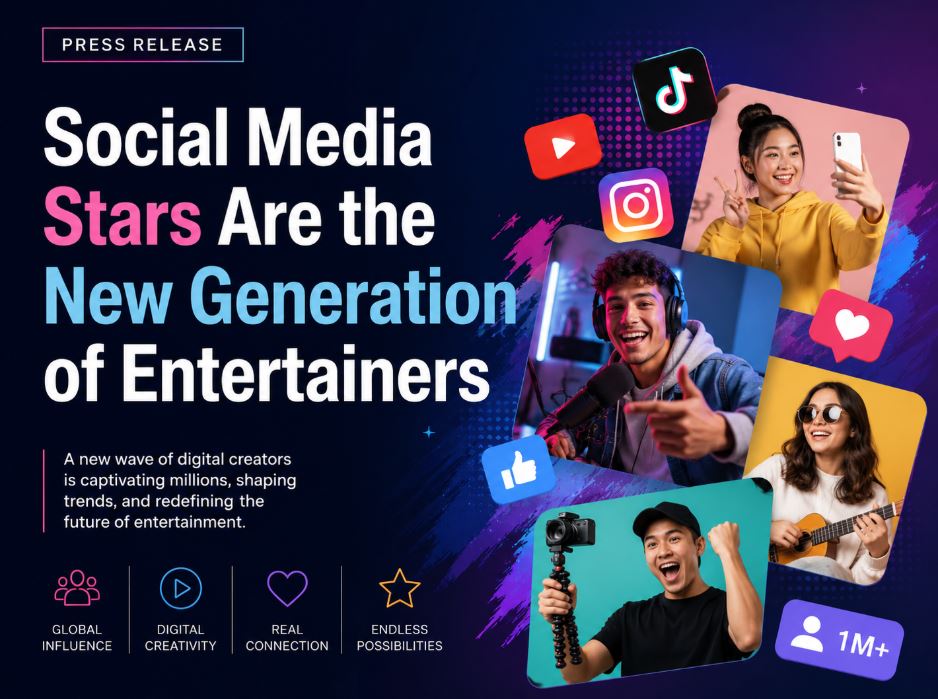
Hollywood, California / 500NewsWire / July 2, 2026 / Entertainment has changed dramatically over the past decade. While television, movies and music continue to attract millions of fans, social media has created a new generation of entertainers who connect with audiences in ways that were once impossible. Today, content creators on platforms such as YouTube, TikTok, Instagram and Twitch are building loyal communities, influencing trends and even competing with traditional celebrities for attention.
Unlike actors or musicians who often rely on television networks, movie studios or record labels, social media stars can share their creativity directly with audiences. A short comedy sketch, travel vlog, cooking tutorial or gaming livestream can reach millions of viewers within hours. This direct connection allows creators to respond to their followers, build trust and develop a unique personal brand.
One of the biggest reasons for the success of social media entertainers is authenticity. Many audiences enjoy watching creators who appear relatable and genuine rather than highly scripted. Whether they are sharing daily routines, discussing personal experiences or showcasing their talents, these creators often feel more accessible than traditional celebrities. This sense of connection encourages viewers to return regularly and engage through comments, likes and live chats.
Brands and entertainment companies have also recognized the growing influence of digital creators. Many film studios, streaming platforms and consumer brands now collaborate with social media personalities to promote movies, television series and new products. In some cases, popular creators have expanded into acting, music, podcasting or entrepreneurship, proving that online success can lead to opportunities across the broader entertainment industry.
The impact of social media stars is also changing how entertainment is produced. Trends often begin online before reaching mainstream media. Viral dance challenges, comedy formats and reaction videos regularly inspire television programs, advertising campaigns and music promotions. This demonstrates how digital platforms have become powerful sources of entertainment ideas and cultural conversations.
However, success on social media also comes with challenges. Creators must consistently produce engaging content while adapting to changing platform algorithms and audience preferences. Competition is intense, and maintaining credibility requires creativity, transparency and responsible communication. Those who continue to innovate while building trust with their audiences are more likely to achieve long-term success.
As technology continues to evolve, the role of social media entertainers is expected to grow even further. Artificial intelligence, live streaming, virtual reality and interactive content are creating new opportunities for creators to engage audiences in innovative ways. Rather than replacing traditional entertainment, social media has expanded the industry by giving talented individuals new ways to reach global audiences without relying on conventional media channels.
Today, social media stars are no longer simply online influencers. They have become filmmakers, comedians, musicians, educators and storytellers who shape popular culture and inspire millions of people worldwide. Their growing influence highlights a major shift in the entertainment landscape, where creativity, accessibility and direct audience engagement are becoming just as valuable as traditional celebrity status.
References
- Pew Research Center. Social Media Fact Sheet – Research highlighting the widespread use of social media platforms and changing digital media habits.
- Deloitte. Digital Media Trends Survey – Annual research examining consumer preferences, streaming habits and the growing role of digital creators in entertainment.