
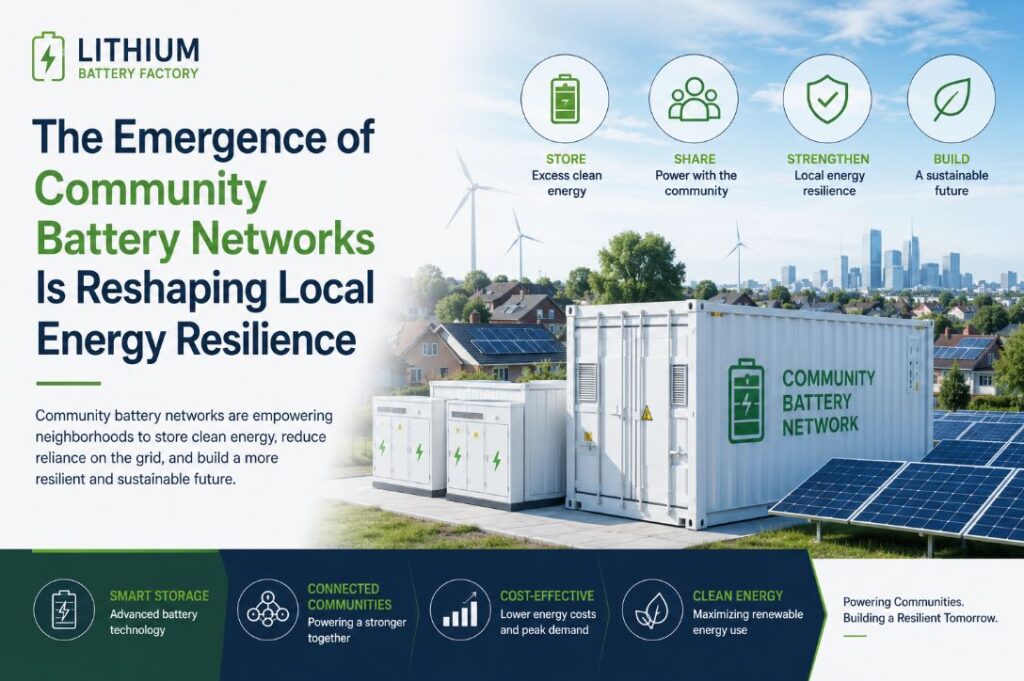
HUIZHOU, CHINA / 500NewsWire / July 9, 2026 / As the global energy sector continues to evolve, communities are exploring new ways to improve energy reliability while supporting the transition to cleaner electricity. One solution gaining significant attention is the development of community battery networks—shared energy storage systems that store surplus renewable energy and deliver it when electricity demand is highest.
Unlike traditional home battery systems, community batteries serve multiple homes or businesses, allowing neighborhoods to share locally generated clean energy more efficiently. As renewable energy adoption accelerates, these shared storage systems are becoming an important part of the future energy landscape.
What Are Community Battery Networks?
Community battery networks are large battery systems installed within local neighborhoods or business districts to store excess electricity generated by renewable sources, particularly rooftop solar panels. Instead of each household installing its own battery, multiple users can benefit from one centralized storage system.
These batteries collect surplus electricity during periods of high renewable energy production and release it back into the local grid during the evening or periods of increased demand. This approach improves the overall efficiency of renewable energy while making clean electricity available when it is needed most.
Supporting a More Reliable Power Grid
Electricity demand changes throughout the day, often placing significant pressure on local power networks during peak hours. Community batteries help balance this demand by supplying stored electricity locally, reducing strain on transmission infrastructure.
By storing energy close to where it is consumed, these systems also reduce energy losses that occur when electricity travels long distances. As cities continue to expand, localized energy storage offers a practical solution for improving grid reliability without requiring major infrastructure upgrades.
Expanding Access to Renewable Energy
Not every household has the opportunity to install rooftop solar panels. Apartment residents, renters, and buildings with unsuitable roofs often face challenges in generating their own renewable electricity.
Community battery networks provide a shared solution that allows more people to benefit from locally generated clean energy. By increasing access to renewable electricity, these systems encourage broader community participation in the transition toward sustainable energy.
Artificial Intelligence Improves Battery Performance
Modern battery networks rely on advanced digital technologies to maximize efficiency. Artificial intelligence and smart energy management software continuously analyze electricity demand, weather conditions, and battery performance.
Using real-time information, these systems determine the best times to store and release electricity, helping operators optimize energy usage while supporting grid stability. Smart automation also improves battery lifespan by ensuring charging and discharging cycles remain efficient.
Strengthening Energy Resilience During Emergencies
Extreme weather events and unexpected power outages have highlighted the importance of resilient energy infrastructure. Although community batteries are not designed to replace the entire electricity grid, they can provide temporary backup power for essential community services and help reduce the impact of local outages.
Their ability to deliver stored electricity during emergencies makes them an increasingly valuable component of modern energy planning, particularly as climate-related disruptions become more frequent.
Environmental Benefits Continue to Grow
Community battery networks also contribute to environmental sustainability. By storing renewable electricity that might otherwise be wasted, these systems reduce dependence on fossil fuel-powered generation during periods of high demand.
Greater use of locally generated clean energy can help lower greenhouse gas emissions while supporting national and regional climate goals. As battery technology continues to improve, the environmental benefits are expected to become even more significant.
Pilot Projects Are Driving Industry Innovation
Utility companies, local governments, and energy developers are launching pilot projects to evaluate the long-term performance of community battery systems. These initiatives are providing valuable data on cost savings, operational efficiency, grid reliability, and customer participation.
The lessons learned from these projects will help shape future energy policies and encourage wider adoption of shared battery infrastructure in both urban and regional communities.
Challenges Still Need to Be Addressed
Despite growing interest, community battery networks face several challenges. Initial installation costs, maintenance requirements, battery recycling, and supportive government regulations remain important considerations for long-term success.
However, continued advances in battery manufacturing, declining technology costs, and improved energy management systems are making these projects increasingly practical and economically attractive.
Looking Ahead
The emergence of community battery networks reflects a broader transformation within the global energy industry. Instead of relying solely on large centralized power plants, many communities are adopting flexible, decentralized energy solutions that improve reliability while supporting renewable electricity generation.
As investment in clean energy continues to grow, community battery networks are expected to become an essential part of future smart cities and sustainable communities. By combining renewable power with intelligent energy storage, these systems have the potential to create stronger, cleaner, and more resilient electricity networks for generations to come.