
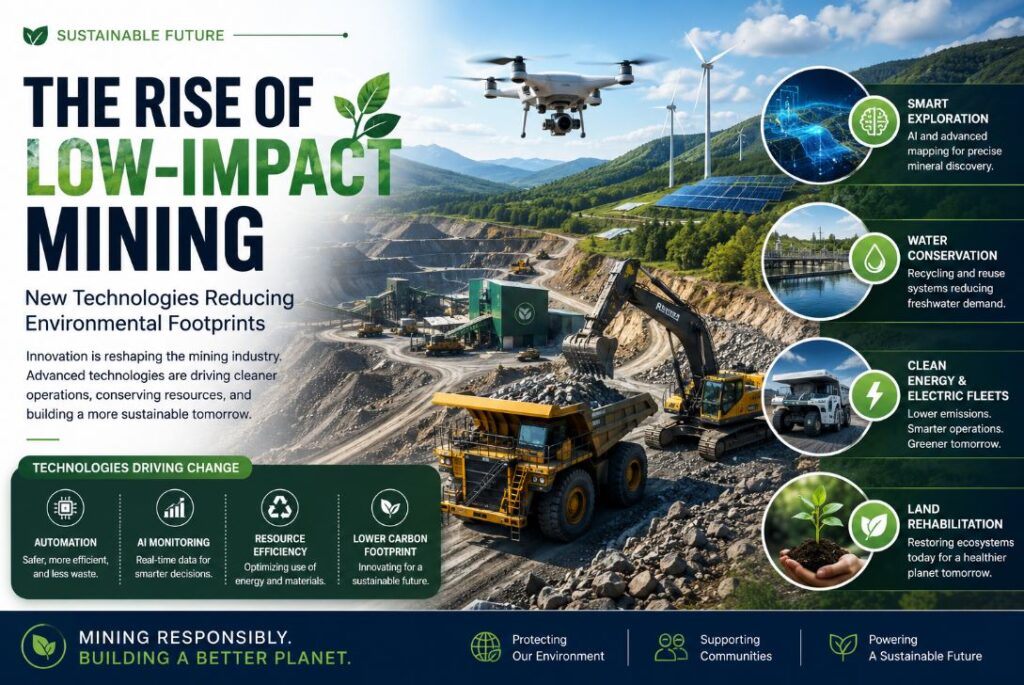
New York, NY / 500NewsWire / July 6, 2026 / As global demand for critical minerals continues to increase, the mining industry is undergoing a significant transformation. Companies are increasingly investing in technologies that reduce environmental impacts while maintaining efficient production. This shift toward low-impact mining is becoming an important part of the industry’s long-term strategy as governments, investors, and communities place greater emphasis on sustainability.
Minerals such as copper, lithium, nickel, graphite, and rare earth elements are essential for electric vehicles, renewable energy systems, batteries, and modern electronics. As countries continue expanding clean energy initiatives, the need for these resources is expected to remain strong. At the same time, mining companies are being encouraged to develop these materials using more environmentally responsible methods.
One of the most important advances is the adoption of precision exploration technologies. Using artificial intelligence, satellite imagery, drone surveys, and advanced geological mapping, exploration teams can identify promising mineral deposits more accurately before excavation begins. This approach reduces unnecessary drilling, lowers operational costs, and minimizes disturbance to surrounding landscapes.
Automation is also changing how mines operate. Modern autonomous drilling equipment, remote-controlled machinery, and intelligent monitoring systems are helping companies improve productivity while reducing fuel consumption and equipment wear. These technologies not only increase efficiency but also contribute to lower greenhouse gas emissions by optimizing mining operations.
Water conservation has become another major focus. Mining has traditionally required large volumes of water for processing minerals and controlling dust. Today, many operations are installing advanced recycling systems that capture, treat, and reuse water throughout production. By reducing freshwater consumption, these systems help preserve local water resources and lessen the environmental impact on nearby communities.
Renewable energy is playing an increasingly important role in powering mining facilities. Solar panels, wind turbines, and battery storage systems are being integrated into operations to reduce reliance on diesel-powered generators. In remote mining locations, hybrid energy systems are providing cleaner and more reliable power while lowering carbon emissions.
Artificial intelligence is further improving environmental management across the mining sector. Smart monitoring systems continuously collect data on energy usage, air quality, equipment performance, and water consumption. By analyzing this information in real time, operators can identify potential problems early, improve efficiency, and reduce unnecessary waste before issues become more serious.
Electric mining vehicles are also beginning to reshape the industry. Battery-powered haul trucks and underground equipment generate fewer emissions than conventional diesel machines while producing less noise and improving air quality for workers operating below ground. Although adoption remains gradual, industry experts expect electric mining fleets to become increasingly common over the coming years as battery technology continues to improve.
Beyond technology, many mining companies are adopting progressive land rehabilitation practices. Instead of waiting until mining activities have ended, operators are restoring disturbed land during active production whenever possible. Native vegetation is replanted, soil conditions are improved, and wildlife habitats are gradually re-established to support long-term ecosystem recovery.
Industry specialists emphasize that successful low-impact mining requires more than technological innovation. Careful planning, transparent environmental reporting, responsible resource management, and ongoing collaboration with local communities all play essential roles in creating sustainable mining operations. Strong environmental governance helps build public trust while supporting responsible economic development.
The mining industry is entering a new phase where environmental performance is becoming as important as production efficiency. Investors are paying closer attention to sustainability initiatives, manufacturers are seeking responsibly sourced minerals, and consumers increasingly value environmentally conscious supply chains.
As innovation continues to accelerate, low-impact mining is expected to become a defining feature of the industry’s future. By combining advanced technologies with responsible environmental practices, mining companies have the opportunity to meet growing global demand for critical minerals while protecting natural resources for future generations.