

Ask a car buyer in Dubai or Sharjah where to look for a fair price, and Ajman comes up quickly. The smallest of the seven emirates has built a reputation for used cars that cost less than similar vehicles elsewhere in the country, and for a market where a buyer can compare a large number of cars in a short drive.
Lower prices are only part of the story, though. A used car bought in Ajman is registered, insured and transferred under the same federal framework that applies across the UAE, with local procedures run by Ajman Police. Buyers who understand those rules before they pay tend to drive away with a good deal. Buyers who skip them sometimes inherit someone else’s fines, loans or legal problems.
Why Ajman’s prices draw buyers
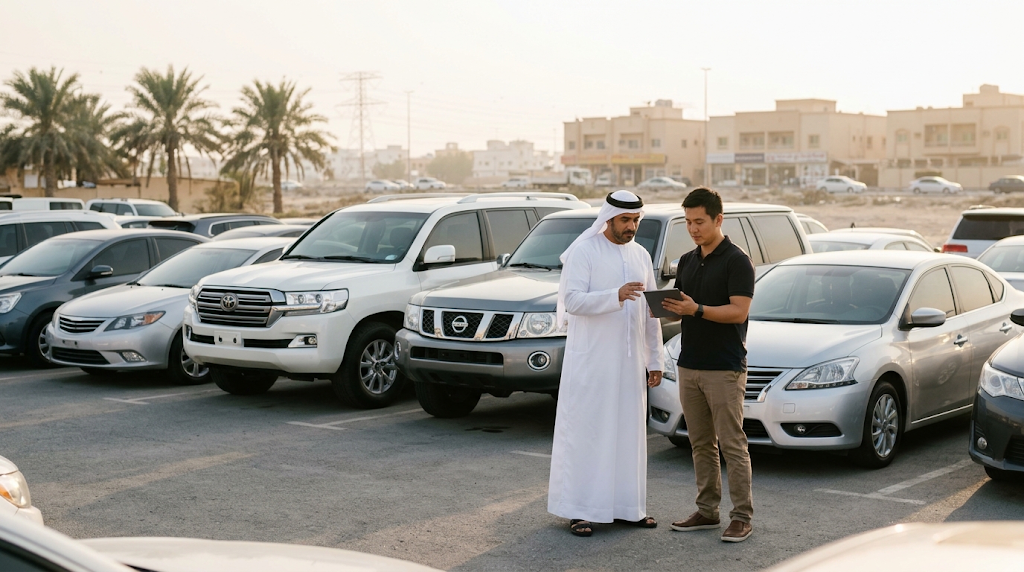
Several things keep Ajman competitive. Commercial rents are generally lower than in Dubai, which helps dealers keep overheads down. The emirate sits next to Sharjah and within easy reach of Dubai, so its dealers sell to customers from across the northern emirates. And its showrooms carry a wide mix of stock, from family sedans and pickups to SUVs, at different ages and price points.
For residents on a budget, that mix matters. A buyer can compare several versions of the same model, with different mileage and service histories, in one afternoon. Traders who source cars for overseas markets also buy in Ajman, which keeps stock moving and prices realistic.
Dealer or private seller: the legal difference
The first question every buyer should ask is who they are buying from. When the seller is a business, the UAE’s consumer protection law, Federal Law No. 15 of 2020, applies. It requires suppliers to give accurate information about the goods they sell and protects consumers against misleading descriptions. A dealer who misstates a car’s accident history or mileage can face a complaint through the consumer protection authorities.
A private sale carries fewer built-in protections. The agreement between buyer and seller does most of the work, so it should be in writing and record the price, the mileage, the vehicle’s condition and any defects the seller has disclosed. Payment should be traceable, ideally by bank transfer, so there is a clear record of what was paid and when.
The documents to check before paying
Whatever the type of seller, a careful buyer in Ajman should see and check the following before handing over money:
- The vehicle registration card (mulkiya), with the owner’s name matching the seller’s Emirates ID.
- The chassis number on the mulkiya, matching the number on the car itself.
- A clear fines record. Unpaid traffic fines linked to the vehicle have to be settled before ownership can move.
- Proof that any car loan is fully paid. If the car was financed, the bank must issue a clearance letter so its interest can be removed from the registration.
- The service history, where available, to support the mileage and condition the seller describes.
An independent inspection is also worth the cost. A mechanic or a testing centre can spot accident repairs, flood damage or engine problems that are easy to miss on a short test drive.
Transferring ownership in Ajman
Ownership transfer for an Ajman-registered vehicle goes through Ajman Police’s traffic and licensing department, and many steps can now be completed through the UAE’s official smart services. In general, the car must pass a technical inspection, the buyer must arrange insurance in their own name, and both parties must confirm the transfer. Until the transfer is registered, the seller remains the legal owner on record, and with that come the fines and liability linked to the vehicle.
Dealers usually handle the transfer for their customers, which is one reason many first-time buyers prefer them. In a private sale, the safest approach is for buyer and seller to complete the transfer together on the day the money changes hands.
A note on VAT and cars bought for export
Buyers sometimes ask whether VAT is included in a dealer’s price. Under the UAE’s VAT law, Federal Decree-Law No. 8 of 2017, dealers in second-hand goods can use a profit margin scheme, which charges VAT on the dealer’s margin rather than the full price. Asking for a proper tax invoice protects the buyer if a question comes up later.
Cars bought in Ajman are not always destined for UAE roads. A share of the market feeds overseas buyers, and export cars follow a separate legal process: the vehicle is cancelled from local registration, issued with an export certificate and cleared through customs at the port. Anyone buying with export in mind should confirm those steps with the seller before paying.
How buyers are searching now
The way people find a car in Ajman has changed. Instead of driving from one showroom to the next, many buyers now start online, filtering by model, year, mileage and budget before they visit. Listings of used cars in Ajman on car marketplaces such as OneClickDrive give buyers a realistic view of prices before they negotiate. The legal checks, the inspection and the transfer still happen in person, between buyer and seller.
A short checklist for Ajman buyers
- Find out early whether the seller is a business or a private person.
- Match the mulkiya, the seller’s Emirates ID and the chassis number.
- Get written proof that fines and any loan are cleared.
- Have the car inspected by someone you choose.
- Pay by traceable transfer and keep a written sale agreement.
- Complete the ownership transfer before you drive the car away.
The bottom line
Ajman’s used car market offers real value for buyers who are willing to compare. That value holds only when the paperwork is in order. A few checks before payment, and a transfer completed on the spot, turn a good price into a safe purchase.